
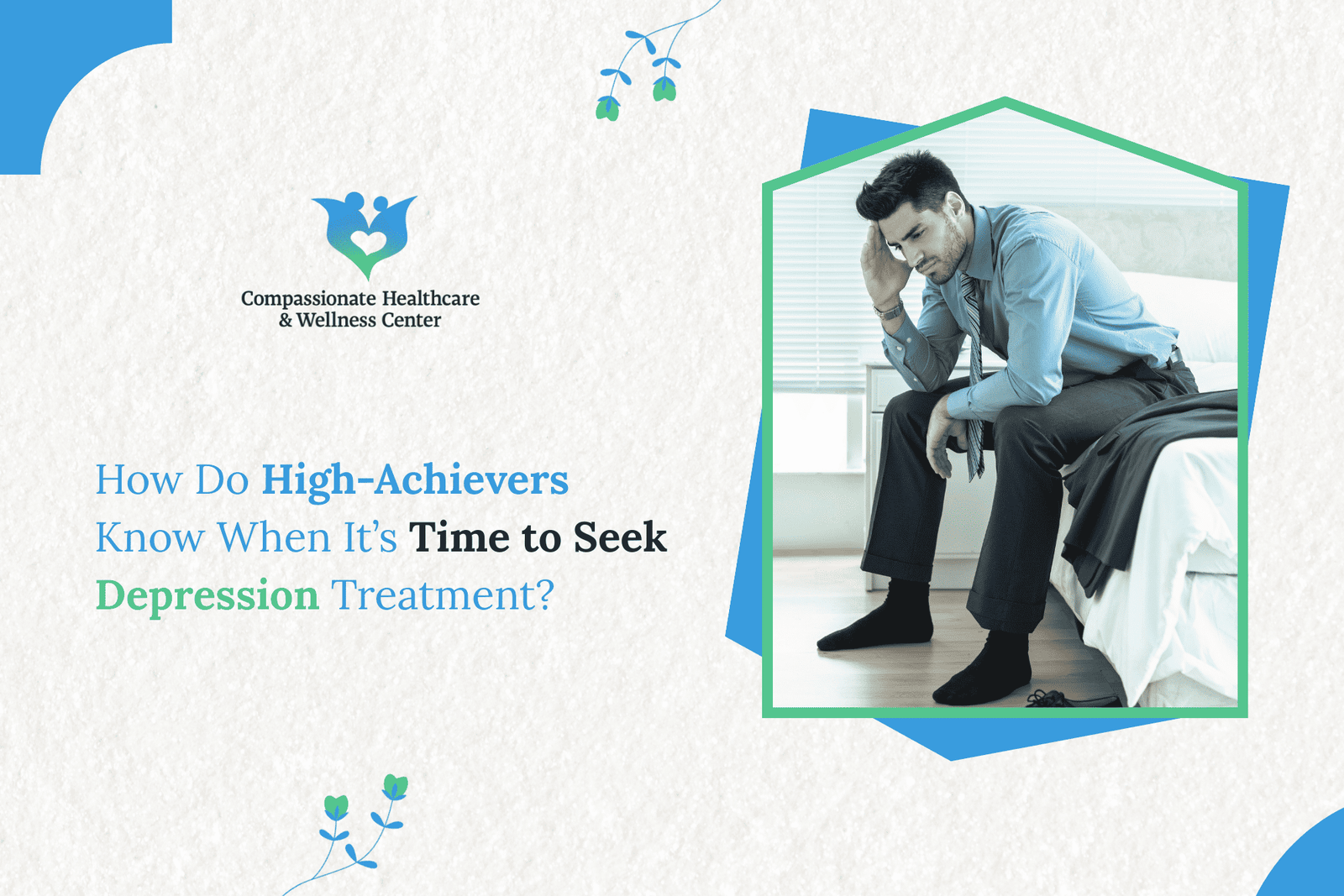
High achievers work hard. You push yourself to do more. You set big goals. You try to be strong. Even capable people can feel sad, tired, or stuck, which can be signs of depression. This can slow you down. It’s a problem if you’re used to working quickly.
How Depression Shows Up for High-Achievers
Depression does not always look like crying all day. For High-achievers it can hide in other ways.
- You feel tired even after sleeping.
- You have trouble starting or finishing tasks.
- You stop enjoying things you used to like.
- You work more but get less done.
- You worry a lot about failure.
- You feel numb or empty inside.
- You get angry or irritable more often.
- You use work to avoid feelings.
- You have trouble sleeping, or you sleep too much.
- You do not eat like before, or you eat a lot more.
If these things keep going for weeks, they may be signs of depression. They can make your life harder. They can also make your work and your family life worse.
When to Be Concerned
You need help now if:
- You think about self-harm.
- You feel hopeless.
- Daily tasks are a struggle.
- Work or school is suffering.
- You’re using drugs/alcohol to cope.
- You’re avoiding loved ones.
Get help immediately. Connect with your doctor, a crisis hotline, or make your way to the emergency services. Express your emotions to a reliable individual.
Why High-Achievers Delay Help
You might wait to get help because you fear failure. You may worry it will harm your career. You might think you should handle this on your own. But asking for help is a brave step. It is not a sign of weakness. Getting help can actually improve your work and your life.
How to Take the Next Step
Here are small steps you can take right now.
- Tell one person you trust how you feel.
- Make a short list of changes you have noticed.
- Ask your primary care doctor for a referral.
- Call a mental health clinic like Compassionate Healthcare & Wellness Center and ask about a psychiatric evaluation.
- If you are in danger or think you might harm yourself, call emergency services or a crisis line now.
You do not need to fix everything at once. One step is enough to start.
What Treatment Might Look Like
Treatment helps you feel better and get back to your life.
- Psychiatric Evaluation. You meet a clinician who learns about your history and symptoms.
- Individual Therapy. You talk with a therapist about your thoughts and feelings. You learn tools to cope.
- Family or Couples Therapy. This helps your close ones understand and support you.
- Medication Management. A doctor can talk about medicine that may help. The doctor watches how you do on the medicine.
- Support for Life Transitions. Therapy can help when jobs, moves, or losses feel too big.
- Grief and Trauma Support. If a past loss or trauma is part of the pain, specific help can aid healing.
- ADHD and Mood Disorders Care. Some people have more than one diagnosis. Care can cover all parts of your health.
Treatment is personal. You and your care team choose what fits you.
How Treatment Helps High-Achievers
Help can give you back energy and focus. It can lower anxiety and improve sleep. You may find your interest in work again. You learn skills to handle stress. You also get a safe space to share what you feel. This makes you stronger in the long run.
How We Can Help at Compassionate Healthcare & Wellness Center
At Compassionate Healthcare & Wellness Center, we put your mental health first. We welcome new patients. We provide kind and personal care for people of all ages. We can help you with:
- Psychiatric evaluations
- Individual therapy
- Family and couples therapy
- Medication management
- Anxiety and depression treatment
- ADHD and mood disorder care
- Grief and trauma support
- Support for life transitions
We offer a safe space where you will be heard. We know each person’s story is different. We will walk with you. We will make a plan that fits your life and your goals. You do not have to do this alone.
Tips for High-Achievers While You Seek Help
- Keep your routines as much as you can.
- Try to get some fresh air each day.
- Share small tasks with others.
- Set one small goal each day.
- Practice short breaks from work.
- Be kind to yourself. You would tell a friend to be kind. Do the same for you.
Final Words
If you are a high-achiever and you feel off, trust your sense that something is wrong. Seeking help is not a setback. It is a strong choice that helps you do what you care about. At Compassionate Healthcare & Wellness Center, we are ready to listen and support you. You can reach out and take one small step today. You matter and help make a real difference.
FAQs
Q. How long does treatment take?
It varies. Some feel better in weeks. For others, it takes months. We move at your pace.
Q. Is therapy only for big problems?
No. Therapy helps with small and big things. It helps you feel stronger.