
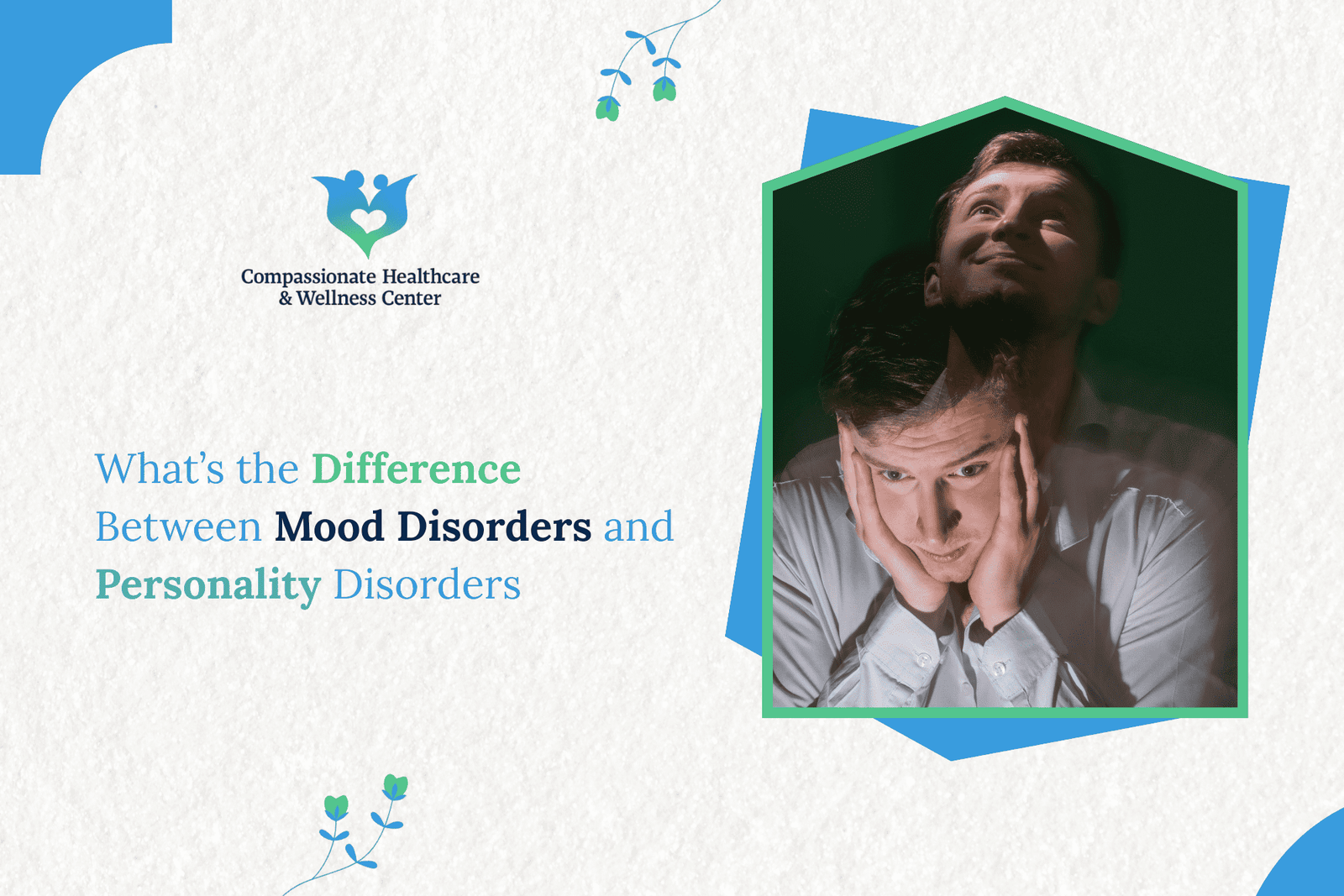

Mood disorders and personality disorders both affect the way someone feels or behaves. However, they are not the same. Understanding the difference will lead you to get appropriate care. Compassionate Healthcare & Wellness Center offers services for people of all ages. Our service provisions include psychiatric assessments, therapy, and medication management to support you or your loved ones.
What Are Mood Disorders?
Mood disorders change the way you feel for a long time. You may feel very sad, very worried, or have big shifts in mood. These problems come and go in phases. An individual with a mood disorder might experience periods of feeling okay, followed by times of intense lows or highs.
Major Depression
- You feel sad most days. You may not enjoy things you used to like. You may feel tired or have trouble sleeping.
Bipolar Disorder
- You have episodes of very high energy or very low mood. The highs and lows can last days or weeks.
It can begin at any age. Yes, it’s hard to deal with, but the right treatment helps. Over time, recovery means being able to feel again.
What Are Personality Disorders?
Personality disorders affect how a person thinks, feels, and gets along with others. These are long-term patterns. They start in their teen years or early adult life. They shape how a person sees the world and how they act in many different situations.
Borderline Personality Disorder
- A person may have strong fears of being alone. They may have big mood swings and trouble with close relationships.
Avoidant Personality Disorder
- A person may feel shy and avoid people because of the fear of being judged.
Personality traits are part of who a person is. When those traits become very rigid and cause big problems in life, doctors may call them personality disorders.
How They Are Different
Mood disorders and personality disorders differ in a few key ways.
Timing and Pattern
- Mood disorders: Feelings change in episodes. You may be good for a while, then not. The change can be fast or slow.
- Personality disorders: The pattern is steady and long-term. It is part of how you behave most of the time.
Cause and Focus
- Mood disorders: Often linked to changes in brain chemistry, stress, or life events. Treatment often focuses on mood and energy.
- Personality disorders: Often linked to long-term patterns, early life experiences, or how a person learned to cope. Treatment often focuses on relationships and behavior.
Treatment Approach
- Mood disorders: Therapy, medication, and support can help the mood become stable. Treatment can work well in a few weeks or months.
- Personality disorders: Therapy that helps with skills and relationships is often used. Change can take more time. Consistent care helps a lot.
Why It Matters
Knowing the difference helps you choose the right care. If you have strong mood swings, you may need medication or therapy that treats mood. If you have long-standing patterns that make it hard to keep jobs or friends, therapy that builds skills may help more.
How We Help at Compassionate Healthcare & Wellness Center
We know every person’s journey is different. We offer caring and professional help. Our services include:
- Psychiatric Evaluations to find the right diagnosis.
- Individual Therapy to work on thoughts and feelings.
- Family & Couples Therapy to improve relationships.
- Medication Management when medicine can help you feel steady.
- Anxiety & Depression Treatment for mood problems.
- ADHD & Mood Disorders care for focus and mood issues.
- Grief & Trauma Support to heal from hard events.
- Support for Life Transitions like moving, new jobs, or loss.
Our team meets you with kindness. We make a plan that fits you. We work with you and your family when you want that support.
When To Seek Help
Seek help if:
- You feel sad or hopeless most days for two weeks or more.
- Your moods change so much that they hurt your job or school.
- You have trouble keeping friends or feel scared in close relationships.
- You hurt yourself or think about hurting yourself.
If any of these happen, call for an evaluation. We can listen and guide you to the right care.
What To Expect from an Evaluation
An evaluation is a talk with a trained clinician. We ask about your feelings, sleep, work, and family life. We may ask about past events and medicines. The goal is to find the best plan for you. We do not rush. We make sure you feel heard.
Simple Tips You Can Try Now
- Keep a mood diary. Write down how you feel each day.
- Try a sleep routine. Establish a daily sleep routine.
- Move your body. Walk, stretch, or play outside.
- Talk to someone you trust. Tell them how you feel.
- If you feel in danger, get help right away.
A Kind Note About Labels
Labels like “mood disorder” or “personality disorder” are tools. They help us plan care. They are not who you are. You are a person with strengths and things to work on. We meet you with respect.
Final Thought
Mood disorders and personality disorders both matter. They need different kinds of care. If you are unsure, a psychiatric evaluation is a good first step. At Compassionate Healthcare & Wellness Center, we make a safe space for you to get help and to heal. You do not have to do this alone.
FAQs
Q. Will therapy help?
Yes. Therapy helps many people. It teaches new skills and ways to cope.
Q. How do I book an evaluation?
Call us or visit our website. We will help you find the right appointment.