ADHD

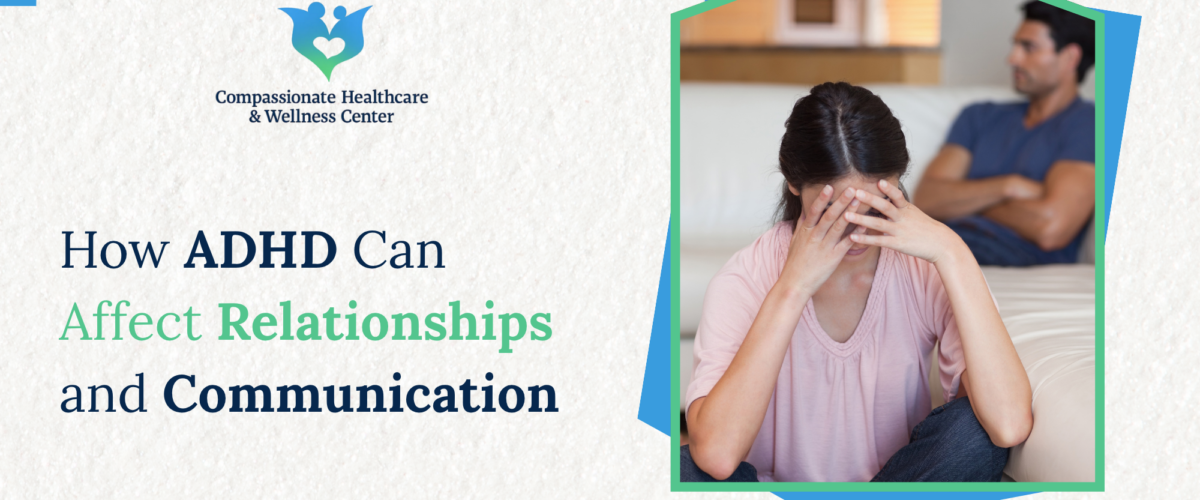
How ADHD Can Affect Relationships and Communication

How ADHD Can Affect Relationships and Communication

If you or your partner has ADHD, communication and connection can be a struggle day-to-day at times. Both partners can get annoyed by interruptions, plans going awry, emotional reactions, and misunderstandings. Every day, relationships rely on attention, working memory, impulse control, emotional regulation, and awareness of time, all of which can be impacted by ADHD. These barriers are not for lack of love or effort.

Understanding How ADHD Influences Relationships

ADHDis more than merely being distracted. It’s about variances in how the brain handles attention, prioritization of information, regulation of emotions, and translation of purpose into consistent action. In a relationship, those variances might create a gap between the meaning of someone and the experience of another.

Maybe your ADHD partner listens really well, remembers an anniversary, or gets a chore done around the house. But the information may not stick, the timing may be loose, or a competing concept may draw focus. From the outside, it can appear to be a pattern of apathy or lack of effort. It often feels like working hard and falling short from the inside.

In the early stages of a relationship, novelty and great interest might temporarily outweigh these problems. The honeymoon phase is often described by couples as a period of intense hyperfocus. Daily living becomes routine: bills, tasks, and long-term planning. Executive functioning needs increase. That’s when the gaps become more obvious and more unpleasant to both people.

When we understand these behaviors as a function of the wiring of the ADHD brain rather than a lack of love, it opens the door for compassion and practical solutions versus cycles of criticism and defensiveness.

Common Communication Challenges

Communication is one of the domains most clearly demarcated by ADHD abnormalities. Here are some of the common trends that couples experience:

  • Trouble focusing during everyday normal conversation. Even when a topic is significant, a partner may seem distracted, glance away, or seem to “zone out.” This is usually not done on purpose. The brain is just having a hard time staying fixated on lower-stimulation input. The listening partner can easily feel unimportant or brushed off.
  • Interruption. Thoughts in an ADHD brain can seem urgent and ephemeral. The person may jump in because they are afraid the idea will not be around if they wait. The inclination is natural, but the effect on the other person is typically frustration, or the sensation of being shut off.
  • Forgetting about conversations and agreements. What seems so obvious in the heat of a discussion may not consistently make it into our working memory. The details can be lost without outside assistance and need to be reiterated with increasing frustration on both sides.
  • Response to emotions. Many people with ADHD experience emotions more deeply and take longer to recover from them. Neutral input can be seen as severe criticism, which can provoke defensiveness or shutdown. Sometimes this is associated with rejection sensitivity, where the disapproval hurts the most when it’s felt.

These patterns do not mean that communication is not possible. They propose revising the typical assumptions about how discussion “should” work.

The Impact on Emotional Connection and Conflict

When communication is always failing, emotional connection can suffer. The non-ADHD partner can start to feel chronically lonely, or as if they’re bearing the emotional labor of the relationship. The ADHD partner may feel chronically inadequate, as if nothing they do is enough.

Conflict frequently follows a predictable pattern:

  • Brings up a worry.
  • The ADHD partner feels criticized and reacts violently.
  • The other partner either intensifies or backs off.
  • They both come out of the conversation feeling more detached than before.

Over time, couples tend to fall into a pursuer-distancer pattern or a nag-withdraw cycle that leaves everyone tired.

Shame is a silent but powerful factor. Many adults with ADHD have a lengthy history of being told they are reckless, lazy, or uncaring. That previous pain might be triggered by relationship tension, and it’s tougher to stay open and collaborative.

The first step in breaking the loop is to understand the cycle. When both partners can spot the pattern instead of each other’s character, the emotional temperature of the relationship often decreases.

The Parent-Child Dynamic and Responsibility Imbalance

One of the most damaging patterns in relationships afflicted by ADHD is a slow drift toward a parent-child dynamic. The non-ADHD partner usually has to do more planning, remembering, organizing, and follow-through. Appointments, bills, household chores, and social logistics begin to disproportionately fall to one individual.

This causes problems for both sides:

  • The partner with the burden can feel more like a manager than an equal partner.
  • The spouse being managed may feel controlled, infantilized, or continually evaluated.
  • Neither individual picked this arrangement, and yet it can become the norm when systems aren’t intentionally developed jointly.
  • So, one side gets resentful, the other side gets guilt or passive resistance.
  • Intimacy suffers because you can’t really feel like romantic partners when one person is always in the role of supervisor.

To engage with the dynamic, both parties need to move out of their default roles. Shared external systems calendars, lists, reminders, and clear divisions of responsibility can cut down on the requirement for one person to be tracking everything all the time. The goal is not perfection, but a more equal adult-to-adult connection.

Effects on Intimacy and Daily Life

Attention-deficit/hyperactivity disorder (ADHD) can affect intimacy and day-to-day connection in several ways:

  • That early hyperfocus that seemed so connected might wane when novelty wears off, leaving one partner wondering if attraction has evaporated when the adjustment is really about how attention works.
  • Vulnerability might feel risky if there is inconsistency in emotional presence/follow-through.
  • Chronic lateness, unfinished work, losing things, and scrambling at the last minute create low-level stress that fills the whole atmosphere of the partnership.
  • They are not character faults, but they do have genuine implications in terms of trust and ease.

The good news is that many of these behaviors may be effectively addressed with targeted techniques, including, where warranted, professional help. Once the invisible hurdles are acknowledged and removed, couples who learn to work with the ADHD brain rather than against it frequently experience stronger connection.

Practical Strategies for Better Communication and Connection

Betterment seldom results from working harder with the same old approach. This is done by shaping the environment and the ways of communicating to match the way both brains actually work. Here are some strategies that benefit many couples:

  • Establish an environment for concentration.  Pick quiet, low-distraction times for essential conversations. Pack away those cell phones. Agree that some topics need devoted time and should not be brought up in the middle of other activities.
  • Use simple and exact terminology. Too easily misinterpreted are vague requests. Instead of “Can you help out more with the house? Try asking “Can you do the dishes on Monday, Wednesday and Friday nights?” Concrete agreements are easier to follow through on for an ADHD brain.
  • Externalize memory together. Digital shared calendars, shared note applications, whiteboards, and quick written follow-ups after conversations lessen reliance on internal recall. If you agree on something essential, write it down where you can both see it.
  • Reflective listening and practice. The listening partner can summarize what they heard before they react. It helps both partners stay oriented, and it offers the ADHD partner a chance to affirm or correct.
  • Distinguish purpose from impact. Someone may not plan to harm, but create hurt. This acknowledges the damage, but also acknowledges purpose, reducing defensiveness and keeping the discourse collaborative.
  • Add pause cues for emotional intensity. Decide ahead of time how to call a short pause if either individual feels flooded. It is nearly always more constructive to come back to the topic after regulation than to try to push through dysregulation.
  • Check in regularly (but low pressure). Having a weekly discussion on what is working, what needs to be changed, and one or two concrete ideas for the coming week helps prevent difficulties from mounting up.
  • Educate yourselves on ADHD. Shared understanding diminishes the tendency to personalize each friction point. When both partners view these patterns as problems that the partnership can work on, rather than something that one person is “doing wrong,” it is easier to work together.

When to Seek Extra Support

Some couples make considerable progress on their own once they acknowledge the ADHD influence.  Some are helped from outside. If you are experiencing any of the following, please reach out:

  • The bitterness has become chronic.
  • The same conflicts keep happening with no resolution.
  • One or both partners feel chronically overwhelmed or lonely.
  • Emotional reactivity is eroding trust.

Individual therapy for the person with ADHD, couples counselling with a doctor knowledgeable about adult ADHD, or ADHD coaching may all be effective. At Compassionate Healthcare & Wellness Center, we help individuals and families who are dealing with these same issues. We stress the need for practical skills, emotional safety, and specific tactics targeted to the ways in which ADHD manifests in relationships and in everyday life.

Moving Forward Together

ADHD doesn’t have to be the defining factor in a relationship. But those very qualities that produce friction, inventiveness, energy, intensity, ability to focus deeply can also give vibrancy and loyalty if both partners learn to deal with them.
The change starts with proper understanding: These issues are neurological, not moral. From there, couples may replace blame with processes, criticism with clarity, and isolation with teamwork.
If this description feels familiar and you would need support that is specific to your situation, we are here at Compassionate Healthcare & Wellness Center. Contact us to see how we can assist you and your spouse in having clearer communication, more balanced relationships, and a connection that feels sustainable and connected. You don’t have to go through this alone.
This post is for educational purposes only and does not constitute professional diagnosis or treatment. If you or your spouse are struggling, consider speaking with a certified mental health professional who understands adult ADHD.

Family Therapy

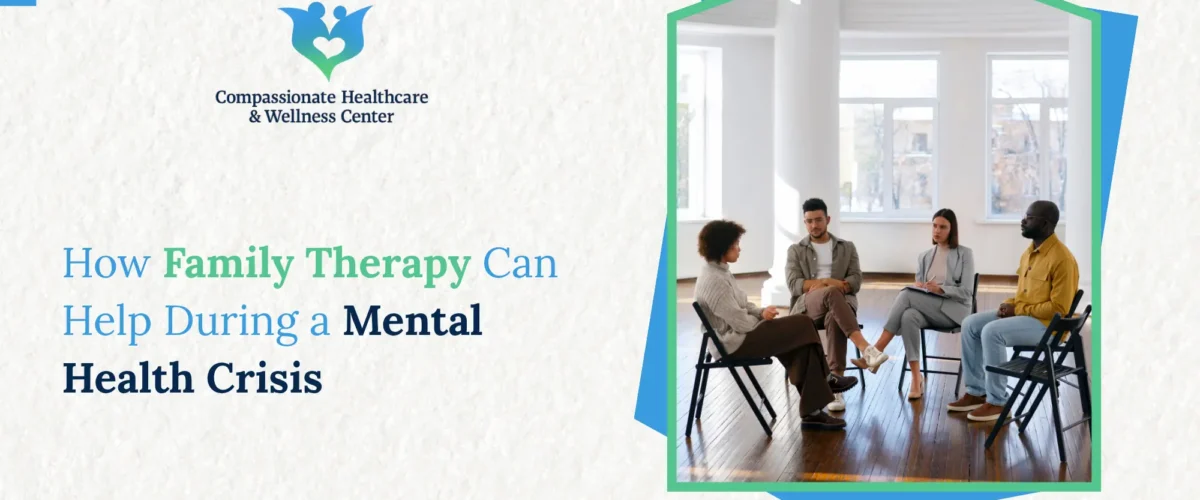
How Family Therapy Can Help During a Mental Health Crisis

A mental health crisis is a lot for a family to deal with. Fear, guilt, frustration, and uncertainty can make communication difficult, and the person in crisis may need rapid care. While individual therapy is crucial, the family may also need help responding appropriately.

Family therapy is a great method to work through these issues together in a systematic fashion. Attention to the family as an interrelated system can promote communication, increase support, decrease distress, and prevent future crises.

Understanding a Mental Health Crisis

A mental health crisis happens when an individual’s emotional or behavioral state is so severe that they are unable to function safely or efficiently in their everyday life, and people around them feel they cannot help without extra treatment. This may include severe, persistent anxiety or panic, deep sadness with feelings of hopelessness or self-harm, manic or psychotic symptoms, substance-related situations, or any circumstance where safety is at stake.

Crises don’t happen in isolation. Family members may detect early warning indicators including changes in sleep, withdrawal, irritation, or strange utterances, but they may not know what to do. Sometimes the effort to help can make the tension worse if the lines of communication are already stressed. Then the crisis impacts the entire family: routines break down, siblings are left out, parents or partners suffer secondary stress, and relationships are strained by concern and uncertainty.

The first step to becoming a more effective support person is to understand that a crisis is a family affair, not just an individual affair. This is what family therapy is founded on.

What Family Therapy Actually Is

Family therapy is a form of psychotherapy in which several members of a family (or essential support people) meet with a qualified therapist to work on issues. The therapist looks at patterns of interaction, communication, roles, and emotional responses within the family system. It’s not about assigning blame. Rather, it’s about understanding how the family functions as a unit and how those dynamics impact the person in distress and how the distress impacts the family in turn.

Sessions usually involve the person with symptoms, plus parents, partners, siblings, or other relevant family members. The therapist provides a safe space for all members to speak and be heard.

Different techniques include systemic family therapy, structural family therapy, and models emphasizing psychoeducation (clear instruction about the mental health issue) and skill-building in communication and problem-solving. There is good support, for example, for family-focused therapy for bipolar illness, and other organized techniques can be helpful for schizophrenia spectrum diseases, depression, and teenage behavioral or emotional problems.

According to the American Association for Marriage and Family Therapy and materials from SAMHSA, engaging family members can help enhance results for individuals in recovery from mental illness or addiction. The therapy helps the family become a better support system rather than a cause of additional stress.

How Family Therapy Helps During a Crisis

Family therapy offers several specific types of support when a crisis occurs.

It improves communication under pressure.

In the heat of a crisis, conversations often turn circular, critical, or avoidant. One person may push too hard for answers while another shuts down. A therapist helps the family slow down, practice clearer speaking and listening, and replace blame with curiosity. Family members learn to express concern without escalating fear, and the person in crisis gains a safer way to share what they are experiencing. Better communication reduces misunderstandings that can prolong or intensify distress.

It builds shared understanding through psychoeducation.

Many families find themselves in crisis with little knowledge of the mental health problem involved. This might cause misunderstandings; for example, poor motivation can be seen as laziness, or irritation can be seen as willful rejection. Family therapy involves giving accurate information about symptoms, common triggers, treatment alternatives, and reasonable expectations for recovery. With a clearer picture for all, unrealistic demands fall and supportive answers rise. Studies on family psychoeducation have found that it can lower the chance of relapse and enhance the way families cope with continuing difficulties.

It creates practical safety and crisis plans.

Therapists work with families to build written plans that include early warning signals, de-escalation techniques, who to notify, and what to do if safety is at risk. Such plans may outline particular roles for family members, ways to communicate during high-stress periods, and clear pathways to professional support, including when to call crisis lines or seek emergency care. Having a shared plan lessens the feeling of chaos and allows everyone to react more consistently.

It reduces blame, guilt, and unhelpful conflict.

Families too often have hidden questions: “Did we cause this?” “Why can’t they just try harder?” “Am I a failure as a parent, as a partner?” Therapy helps bring these feelings into the open in a guided manner. The therapist reframes the issue as a shared challenge, not an individual’s fault. Research links reducing expressive emotion patterns of strong criticism, hostility, or over-involvement with improved results for patients with major mental health issues.

It strengthens the broader support system.

Crisis can cut families off. Therapy fosters the recognition and use of natural supports (extended family, trusted friends, community resources) and collaboration with individual treatment providers. It also acknowledges the needs of other family members who may be hurting quietly: siblings who feel neglected, spouses who are fatigued, or parents who have put their own well-being on hold.

It supports both the individual and the family long-term.

It is dealing with the acute crisis at the same time it is planting seeds of skills that continue to aid after the acute phase is over. Families exercise collaborative problem-solving, emotion regulation, and connection maintenance in the face of changing symptoms. This can help to make future issues less daunting and lessen the chance of repeated emergency interventions.

What to Expect in Family Therapy Sessions

The first few sessions are usually about understanding the present problem, hearing everyone’s perspective, and establishing safety. The therapist looks at family dynamics without judgment and works with everyone on goals. Later sessions are devoted to practicing skills, revising the crisis plan, and working on current relationship issues.

Sessions can feel intense at first. Emotions come up. People might disagree. A good therapist will guide this process carefully so that it does not become overpowering, but remains productive. You don’t need to have every family member at every session. The group can be flexible in its make-up depending on what will be most useful. When the focus is crisis, therapy is usually time-limited, although some families remain longer to do deeper relational work.

Confidentiality is treated with care. The therapist sets explicit limitations, especially around safety issues, and tries to find a balance between the individual’s privacy and the family’s need for shared information.

Practical Tips for Families Facing a Mental Health Crisis

Professional aid is crucial, but families may do things right now that will help:

  • Safety first. Remove or secure objects that could be used for self-harm if needed, and know the local crisis resources. The 988 Suicide & Crisis Lifeline is available 24/7 in the United States by calling or texting.
  • Listen more than you provide advice at first. Before you suggest ideas, paraphrase what you hear (“It sounds like you’re feeling completely overwhelmed”).
  • Keep your communication cool and short. Avoid extended monologues or numerous people talking at once.
  • When possible, take care of basic requirements as a group: regular meals, sleep routines, and brief breaks from intense discourse.
  • Reduce the amount of critical decision-making at the height of the crisis. First, try to get things stabilized.
  • Get your own support. Carers want spaces to handle stress so they can stay steady.
  • Write down patterns that appear to be useful or detrimental. This information can be valuable if you are seeing a therapist.
  • Don’t isolate. Contact dependable folks who will provide practical help or listen.

These procedures are not a substitute for expert treatment, but they can minimize secondary stress and provide a more stable environment while help is being organized.

When and How to Seek Family Therapy

Family therapy is indicated when more than one person in the home is experiencing a mental health crisis, when communication has broken down, when family members are locked into unhelpful habits, or when individual treatment alone is not providing the desired stability. It is also helpful after a crisis to process what happened and to build the family’s capacity to respond in the future.

Look for certified marital and family therapists, clinical social workers, or psychologists who have specialized training and expertise in family systems work and crises. Ask about their safety planning method, their experience with the related mental health disorders, and how they engage all participants. Many practices, even those providing telehealth, can get up and running relatively fast when there’s a sense of urgency.

Family and couples therapy is one of the mental health treatments provided at Compassionate Healthcare & Wellness Centre in Richmond, Virginia. Psychiatric assessments and individual therapy are also offered. The goal is to develop a secure, understanding space where individuals and families can meet problems with compassion and evidence-informed care.

Moving Forward Together

A mental health crisis is scary, but it doesn’t have to determine the family’s destiny. Family therapy gives a pathway through the intensity. It allows us to communicate better, to respond better, and to restore a sense of cooperation and hope. While recovery is rarely straightforward, families who learn to weather crises together frequently emerge with better communication, more defined boundaries, and greater resilience.

If your family is going through a difficult time, seeking professional support is a sign of strength, not weakness. Help is at hand, and involving those who care most can make a real difference, both in the near term and on the longer journey ahead.

Workplace Independence

Helping Young Adults Navigate the Transition from High School to Workplace Independence

Something odd happens to a lot of kids about six months after graduation.

The structure that ran their whole life just disappears. Bells, class periods, a teacher telling you what happens next, all of it gone at once.

A job doesn’t hand any of that back to you. You’re supposed to build your own version of it, on your own timeline, usually while also figuring out laundry and a bank account for the first time.

This isn’t a motivation problem for most young adults. It’s more like being handed a set of tools nobody taught them to use.

There’s an Actual Biological Reason This Age Is Hard

People love to complain about “kids these days” without actually realizing that there is brain science behind why this part of development actually can be tougher than it appears from the outside looking in.

The prefrontal cortex handles planning, judgment, and impulse control. It’s the last part of the brain to finish developing, usually not until around age 25.

Harvard researchers studying adolescent brain development have said as much directly.

So the years someone’s expected to hold a job, budget their own money, and basically run their own life for the first time are also the years their brain is still finishing the wiring for exactly those tasks.

Not an excuse for anyone to hide behind. Just useful context for why this is harder than “just get a job” makes it sound.

The Numbers Match What Every Family Already Suspects

Mental illness rates are highest of any adult age group in the country, among young adults ages 18-25. The latest national figures from SAMHSA in 2019 suggest about a third of that age group has experienced at least one serious mental illness within the previous 12 months.

Anxiety hits this group especially hard. CDC survey data has around 37 percent of young adults reporting significant anxiety symptoms, higher than any other adult age bracket.

And treatment isn’t reaching most of them. Close to half of young adults with a diagnosable mental illness get no treatment at all.

Now layer a first job, a first apartment, and a first stack of real bills on top of that. What looks like a small subset of struggling kids is really a widespread, well documented pattern tied to a specific and genuinely difficult stretch of life.

The Specific Things That Trip People Up

A few patterns come up again and again.

Executive function tends to be the biggest one. School quietly hands you structure through due dates, class schedules, and constant reminders.

Nobody’s doing that at a job. You have to build the scaffolding yourself, often for the first time, while everyone assumes you already know how.

Handling stress without the old off ramps is another. School had bad days too, but a job attaches financial stakes and a supervisor’s opinion to your bad day in a way a classroom never quite did.

A rough morning that used to mean skipping first period now means calling out and possibly losing hours you actually needed.

Speaking up for yourself is harder than most people expect it to be. Asking a manager to clarify something, requesting a schedule change, pushing back when something feels unfair, that takes a different kind of nerve than raising your hand in class ever did.

A lot of young adults have simply never had to practice it.

And then there’s the boring stuff. Groceries. Laundry. Cooking something that isn’t ramen.

None of it is individually hard, but doing all of it for the first time while also learning a new job tends to be more overwhelming than anyone expects going in.

Real Support Beats Waiting for It to Click

A young adult struggling with this stuff isn’t failing at adulthood. They’re missing specific, learnable skills, and those respond well to actual coaching rather than vague encouragement to figure it out.

Coaching around executive function helps a lot in practice. Breaking a big task into steps that don’t require someone else’s constant reminders, building routines that hold up without a parent nudging along the way.

Practicing planning skills somewhere low stakes before they matter for real makes a real difference too.

For young adults who have even a little bit of anxiety or mood symptoms in the mix, working on stress and emotion regulation is just as important.

Identifying the stress spike early, and developing a plan to deal with it makes all the difference between just getting through a terrible shift or an awkward confrontation with a demanding superior.

Practicing hard conversations ahead of time helps more than people expect.

Role playing an awkward exchange with a therapist or coach before doing it for real takes a surprising amount of the fear out of it.

And treating anxiety or mood symptoms directly, instead of assuming they’ll fade once someone settles into a routine, tends to make everything else easier to build on top of.

It’s rough trying to form new habits while an untreated anxiety disorder is still running the show underneath.

Giving It Space Doesn’t Always Work

There’s a natural instinct to back off and let a young adult sort things out on their own and sometimes that’s exactly right.

But when the real issue is undiagnosed anxiety, an unaddressed executive function gap, or a set of skills school simply never covered, backing off usually just means more missed shifts, more frustration and more evidence stacking up in someone’s head that something’s wrong with them personally.

Nothing’s wrong with them. A stage of brain development is colliding with a pile of expectations nobody prepared them for.

That combination tends to respond a lot better to real support than it does to time alone.

What This Looks Like at CH Wellness Center

Support usually starts with actually figuring out what’s underneath the struggle. Is it anxiety making the job search feel impossible? Executive function gaps making basic planning feel like too much? Some tangle of both?

A real assessment sorts that out instead of guessing at it from the outside.

From there, treatment can combine therapy for whatever’s happening underneath with practical, hands on skill building for the parts of adult life nobody ever formally teaches.

If a young adult in your life is stuck somewhere between graduation and actual independence, and encouragement alone hasn’t budged it, that’s worth a real conversation with someone trained to sort out what’s actually going on.

CH Wellness Center can help build a plan that meets them where they’re at. Reach out to schedule an appointment.

Conflict

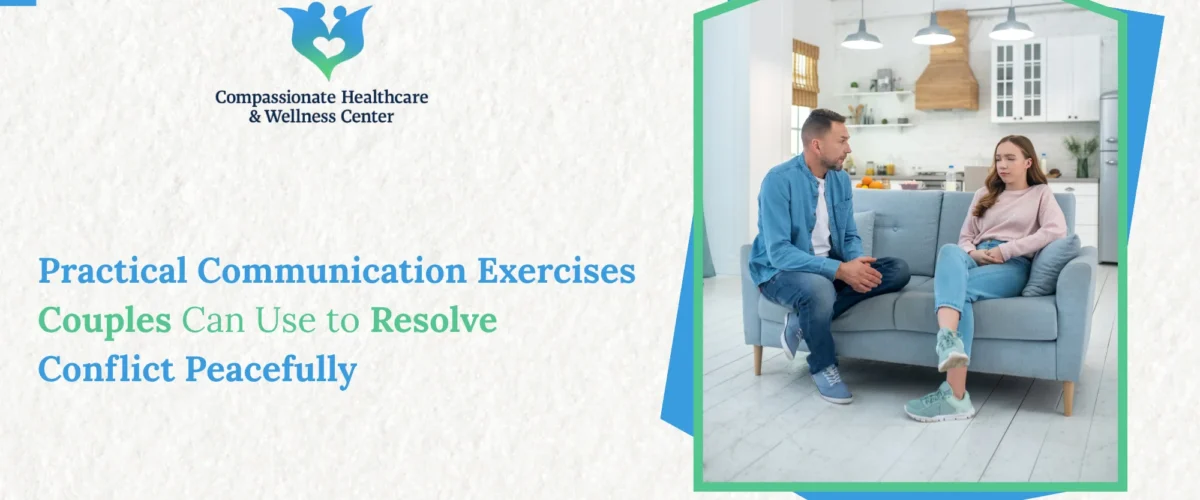
Practical Communication Exercises Couples Can Use to Resolve Conflict Peacefully

Couples don’t just stop caring for each other. What normally occurs is the way they communicate dissolves. Slowly, over time.

For nearly four decades, John Gottman observed couples fight in a lab at the University of Washington—heart rate, tone, face expression—all of it—to see what made firmer bonds than others. And one of his findings, when presented, completely throws people: roughly 70 percent of marital conflict never gets resolved. The same argument goes on for years between couples.

And then you sort of sit with that, and that eases some pressure. The point was never to finalize the debate. It’s learning how to have it without destroying each other along the way.

The Advice Everyone Gives Doesn’t Actually Hold Up

Ask most people how to communicate better during conflict and you’ll hear some version of “practice active listening,” meaning repeat back what your partner said before you respond. Gottman’s lab tested this directly and got a result nobody expected. Stable, happy couples almost never used formal active listening while actually arguing. He described it as something close to emotional gymnastics, a skill that asks too much of people at the exact moment they’re least capable of doing it (source).

That doesn’t mean listening is irrelevant. It means the scripted, textbook version taught in a lot of workshops falls apart the second real feelings enter the room. What actually mattered in his data was something much smaller and easier to remember: how the conversation opened, and whether either partner tried to repair things once it started going wrong.

How You Open the Conversation Predicts Almost Everything

Gottman’s team got so good at reading the first three minutes of a conflict conversation that they could predict, with striking accuracy, how the rest of it would go. A harsh opener, sarcasm, an eye roll, a flat accusation, tends to drag the whole conversation down with it. A softer opener buys both people a little more room before they get defensive.

So instead of “you never help around here,” try something closer to “I’ve felt pretty stretched thin lately and could use more help with the house.” Same complaint. Completely different odds of your partner actually hearing it instead of bracing against it.

Learn to Spot the Four Habits That Predict Real Trouble

The four patterns Gottman identified that repeatedly emerge in couples moving toward serious trouble are as follows: criticism, defensiveness, contempt and stonewalling. According to his research, contempt was by far the strongest predictor of divorce (more than any others), including eye rolling, mockery and sarcasm.

None of these simply manifest out of thin air. They usually only appear when a person has been ignored for long enough that they have given up on being heard the normal way. Even just verbalizing the pattern in the moment, “I think I just got defensive – can I try that again?” is often sufficient to steer a conversation back at least from where it was headed.

Talk About What You Felt, Not What They Did

There’s a reason so many communication approaches lean on statements that start with “I” instead of “you.” Saying “I felt left out when the plans changed without telling me” is a lot harder for your partner to argue with than “you always change plans behind my back.” The first describes your experience. The second is an accusation, and accusations invite defense.

Marshall Rosenberg built an entire framework, Nonviolent Communication, around this same idea: naming what you observed, the feeling that came up, the need underneath it, and a specific request, all without blame woven into the phrasing. It’s been studied well outside of couples work too. A scoping review of NVC training in healthcare settings found it reduced the kind of language that triggers defensiveness between people under real stress, not just in theory but in practice (source).

Know When to Actually Stop and Walk Away

There’s a physical side to conflict that a lot of couples ignore completely. Once your heart rate climbs high enough during an argument, your brain gets worse at listening and worse at thinking clearly, full stop. Gottman calls this flooding. Trying to push through it usually just makes things worse for both people.

A better move, agreed on ahead of time while things are calm: pick a signal either partner can use to call a real pause, and commit to actually coming back to the conversation after twenty minutes or so once heart rates settle. The point isn’t to dodge the topic. It’s coming back to it as two people who can actually hear each other again instead of two people still running on adrenaline.

Practice This Somewhere Low Stakes First

Waiting until a real fight to try a new way of talking rarely goes well, because the middle of an argument is the worst possible time to learn a new skill. A randomized trial testing an online version of Gottman’s psychoeducational program had couples practice these tools outside of live conflict, and the results were significant. Constructive communication improved for both partners, and destructive habits like demand-withdraw and mutual avoidance dropped by more than half in some cases (source).

A simple version of this at home: pick fifteen minutes a week, talk through something smaller and lower stakes, and practice opening softly and speaking from your own feelings instead of their behavior. Building the habit somewhere calm makes it far more likely to show up automatically once a real fight starts.

Signs You Need More Than a Communication Exercise

In some cases, there is nothing wrong with the technique. When conversations turn hostile no matter how softly you open them, when one partner continually shuts down and refuses to engage, or if the same old resentment keeps flaring over and over again despite what you’re really fighting about, that’s typically pointing towards something that a communication tool on its own won’t reach.

If conflict has gotten stagnant for too long, or these exercises help somewhat but not nearly enough, our couples counseling team at CH Wellness Center can help you examine the underlying issues. Get in touch to book a session.

Exhaustion

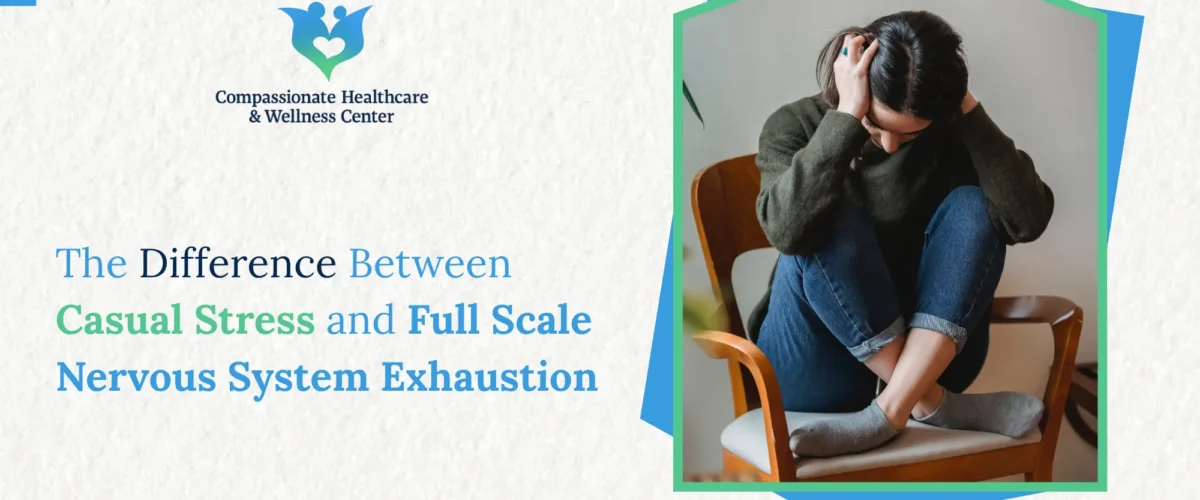
The Difference Between Casual Stress and Full Scale Nervous System Exhaustion

Everyone is stressed. That has become such a given that stress has lost most of its meaning as a word. You ask someone how they are doing and stressed is right there alongside fine and busy as a reflexive answer that does not really say anything.

The drawback is that this makes it extremely difficult to discern whether something has crossed a line.

When stress stops being the passing weather and turns into a climate. When the nervous system has gone beyond just reacting to pressure and is running on fumes so depleted that ordinary life starts to feel like too much.

Those are two different things. And treating them the same way is the reason many people spend years doing breathing exercises and taking baths and wondering why nothing works.

What Stress Is Actually Supposed to Do

Stress is a biological function. Whether a physical or psychological threat, the nervous system senses it, and prepares the body to respond.

Heart rate goes up. Cortisol and adrenaline, naturally the former passes through the blood in a person. Attention turns to the problem at hand. The body is in deal-with-this mode, so your digestion, immune function, and anything non-essential gets deprioritized.

That reaction is actually temporary. The danger goes, the nervous system calms down, and the body heals. Sleep restores what got spent. One full day later, the system is now ready to respond again.

Casual stress follows this arc. A deadline, a hard conversation,a week gone awry. It lands, it presses and it passes. Tired but a good night sleep or doing nothing during the weekend helps. They return to being themselves.

That, the recovery piece, is the thing to focus on.

When Recovery Stops Working

Nervous system exhaustion does not announce itself dramatically. It builds slowly enough that most people do not notice the line being crossed. They just notice, at some point, that rest is not doing what it used to do.

A full night of sleep and they wake up tired. A weekend with nothing scheduled and they feel vaguely worse instead of better. A holiday that should have been restorative and they come back needing to recover from it.

The nervous system at this stage is not stressed in the normal sense. It is depleted. The regulatory system that is supposed to shift between activation and recovery has been running activation for so long that it has lost the ability to properly downshift. The body stays in a low-grade version of threat mode even when there is no active threat. Even when life, on paper, is fine.

This is not a mindset problem. It is a physiological state. The difference matters because it changes what actually helps.

What It Actually Feels Like

Casual stress feels like pressure. It is uncomfortable but it is directional. There is something causing it and the person can usually name it. When the thing resolves the pressure eases.

Nervous system exhaustion feels more like a loss of capacity. Things that used to be manageable start feeling genuinely difficult. Not because they got harder but because the internal resources available to meet them have shrunk.

Some of the ways it shows up that people often do not connect to their nervous system:

  • Noise and light that never bothered them before becoming irritating or overwhelming
  • A flattening of emotion where things that should feel good just feel neutral
  • Decision fatigue that hits earlier in the day than it used to and over smaller decisions
  • A hair trigger for irritability over things that are objectively minor
  • Social interaction that used to be enjoyable starting to feel like something to recover from
  • Physical symptoms without a clear medical cause, headaches, digestive disruption, a chronic tightness somewhere in the body that will not resolve
  • The feeling of watching life from a slight distance, present but not quite inside the experience

That last one particularly goes unrecognized. People describe it as numbness or disconnection and assume it is depression. Sometimes it is. Often it is a nervous system that has spent so long in protective mode that it has started rationing engagement as a conservation strategy.

Why the Standard Advice Does Not Touch It

Take a break. Practice self-care. Meditate. Exercise more. These are not bad suggestions for someone dealing with ordinary stress. For someone in genuine nervous system exhaustion they often land with a thud.

The person who cannot make themselves exercise is not lazy. Motivation and initiation are executive functions that draw on the same depleted resources. The person who meditates and feels worse is not doing it wrong. Sitting with a nervous system in chronic activation can feel like sitting in a room where the alarm is going off. The person who takes a vacation and comes back feeling the same knows that removing external stressors temporarily does not address what is happening internally.

Nervous system exhaustion does not respond to the same inputs as everyday stress because it is not the same condition. The regulatory capacity itself needs to be addressed, not just the load on top of it.

How It Gets to This Point

It is almost never one thing. More often it is a sustained period of high demand without adequate recovery layered under chronic low-grade pressure that became so normal it stopped registering as stress at all. Add poor sleep, which both causes and worsens this state, and the timeline accelerates.

A lot of people who land here were high functioning for a long time. They managed. They delivered. They held everything together. The nervous system can sustain remarkable output for a while before the bill comes due. When it does, the people around them are often the most surprised because from the outside nothing looked wrong.

There is also a hormonal piece that does not get talked about enough. Chronic cortisol elevation eventually disrupts the HPA axis, the system that regulates the stress response itself. When that system starts dysregulating, the body loses its ability to produce a proportionate stress response and then return to baseline. Everything starts registering as threat level high regardless of actual circumstances. That is not anxiety as a personality trait. That is a biological system that has been overrun.

What Actually Helps

Moving beyond nervous system exhaustion takes longer than people wish it did. Just as it built up, recovery is gradual.

The only thing that reliably makes a difference is reducing the chronic load while actively supporting recovery rather than just waiting for it to happen.

The non-negotiable foundation – sleep. Regulatory repair for the nervous system takes place during sleep. Not sleep as something that you do when all the other things are done, but sleep regarded as the priority it in fact is.

Movement helps as well — the type matters. Heavy workouts can push a system already running on fumes beyond its limit. Gentle movement, walking, and stretching can generally more effective than harder training in the acute phase of fatigue.

The social element is tricky because even when the nervous system has been robbed of resources to orchestrate engagement, it feels too costly to interact with others, and being alone (the best remedy for feeling high-stressed) only tends to perpetuate that state even further.

Sometimes what is needed is a clinical conversation about what is actually going on.

Nervous system exhaustion sits at the intersection of mental health, physical health, hormones and sleep in a way that does not always respond to lifestyle adjustments alone.

There are people who need support beyond what can be self-managed.


At CH Wellness Center, this kind of presentation, the person who is not quite depressed, not quite anxious, just running on nothing and cannot figure out why, is something that gets taken seriously rather than handed a pamphlet about stress management.

If rest stopped restoring you and you cannot remember the last time you felt like yourself, that is worth a real conversation.

chwellnesscenter.com

Setting Healthy Boundaries Within Extended Family Relationships 1200x500

Setting Healthy Boundaries Within Extended Family Relationships

Reviewed by the clinical team at Compassionate Healthcare and Wellness Center.

Disclaimer: For informational purposes only. Not a replacement for professional mental health guidance.

Holiday dinner. Someone interrogates you about your relationship, your weight, how you parent, or how much money you have. You deflect. They push.

You leave with the feeling that you just gave a part of yourself that you never wanted to give away.

You are not allowed to say no to the extended family relationships as they bring a different kind of pressure.

They come wrapped in decades of history, heavy obligations, and the unspoken assumption that blood grants unlimited access. It doesn’t.

One of the most clinically impactful things you can do for your own mental health is learning how to hold a line with those you love – or have a sense of obligation to.

What a Boundary Actually Is

A boundary is not a wall, nor is it a punishment. It is simply information about what you will and will not participate in.

It is a statement of what you need to stay in a relationship with someone, rather than a strategy to withdraw from it.

Boundaries in family therapy exist on a scale:

  • Enmeshed: There is no meaningful separation between one person’s needs, emotions, and decisions and another’s.
  • Disconnected: There is no physical contact, emotionally intimate interaction, or connection.
  • Healthy Interaction: Your relationship is connected but not fused, separate yet close.

Most extended family conflicts stem from enmeshment – the assumption that family members are entitled to access, time, opinions, and decisions that you would never tolerate from a friend or colleague.

Why Setting Boundaries with Family Is So Hard

If setting boundaries sounds simple on paper then why is it so exhausting in practice?

1. Built-In Guilt

Guilt is engineered into family systems in ways it isn’t in other relationships. Setting limits is often framed as rejection: “You’re being too sensitive,” “Family is supposed to be there for each other,” or “You’ll regret this when they’re gone.”

2. Nervous System History

The people you are setting limits with today are often the same people who set the terms of your life when you were a child with zero power to push back. While your adult brain knows you can get up and leave the table, your nervous system hasn’t always caught up.

3. Differentiation of Self

This self-differentiation – being able to think, feel, and connect with family without getting automatically pulled in the direction of family sentimentality or cohesion — is what Murray Bowen, who devised Bowen Family Systems Theory, calls differentiation of self.

Clinical Takeaway: Due to lower differentiation, high emotional reactivity can lead people to total cutoff. Therapy is about increasing differentiation.

What Needs a Boundary?

Not every family friction needs to be a sit-down. The most ideal way out of numerous little issues is to pivot, change the subject, or leave the room.

Explicit limits are worth stating when:

  • A pattern repeats continuously despite your obvious discomfort.
  • The behavior impacts your well-being, your relationship with your partner/children, or your daily functioning.
  • You start avoiding family strictly to escape a dynamic rather than out of choice.
  • There is a specific behavior that must stop, rather than just general tension you hope will fade.

How to Actually Set a Boundary

Clear & Brief > Explained & Justified

  1. Keep it concise: The longer your explanation, the more material you offer up for debate. “I’m not going to discuss my marriage” is far harder to argue with than a three-paragraph monologue explaining why the question feels intrusive.
  2. Focus on your actions, not theirs: Frame limits around what you will do. “If the conversation goes that direction, I’ll step outside” is far more enforceable than “You need to stop asking about this.” You can control your behavior; you cannot control theirs.
  3. Anticipate the pushback: In any family system, changing your behavior creates systemic pressure for you to return to the old status quo. Pushback is proof the boundary registered, not that it failed.

When It Doesn’t Go Well

Certain family members will honour your limit after pushing back at first, whilst others won’t. But a boundary that no one respects will still help you, because it clarifies the relationship for yourself.

If your boundaries are constantly disrespected, your options for contact become obvious:

  • Decreasing Contact. This seems a little more drastic than just limiting communication, but this does not necessarily mean you are cutting someone who may be toxic out of your life. Others achieve some functional balance through quarter-frequency or structural ties (large family functions rather than one-on-one visits).
  • Estrangement. Adult children and parent estrangement is more prevalent than most people realize, according to Professor Lucy Blake at the University of Cambridge. It is not always a good move, nor is it the only bad move. The decision must be made from a place of consideration, though, not because of anger or burnout.

When the Relationship Is Abusive

Boundary-setting inside an abusive family dynamic is a very different clinical conversation.

Things like chronic emotional manipulation, intentional soul-shattering behaviour to undermine self-worth consistently, extreme control, or physical intimidation cannot be dealt with the usual boundary tools.

When your family dynamic involves abuse, work with a therapist first before you attempt to unwind the dynamic directly. If you try to do so without professional help, you may jeopardize your safety.

Support at Compassionate Healthcare and Wellness Center

Navigating long-standing family dynamics isn’t something you have to figure out on your own.

Located in Richmond, Virginia, the clinical team at Compassionate Healthcare and Wellness Center provides individual therapy, family and couples therapy, and psychiatric care for adults dealing with relationship stress, anxiety, depression, and the mental health impacts of complex family dynamics.

If family relationships are weighing on your well-being, professional guidance can help you find your footing.

  • Phone – 804-234-3568
  • Email – Info@chwellnesscenter.com
  • Location – 2112 W Laburnum Ave., Suite 109, Richmond, VA 23227
  • Website –chwellnesscenter.com

Simple Steps to Create an Emotionally Safe Home Environment for Your Family

The way kids and teens respond to a mistake can reflect the environment of their home.

For instance, a kid who tells their parent about the bad grade they just received, rather than hiding the test for a week, and a teen who stands up to the parent but still shows up to dinner, for example, can point to different home situations.

Just because there is home conflict does not mean there is no emotional safety. Rather, home conflict should not make family members feel like they are no longer part of the family.

What Emotional Safety Actually Means

An emotionally safe home does not equate to being a home that is soft and has no hard conversations. In an emotionally safe home, you can be wrong, upset, embarrassed and angry and still remain a welcomed member of that home.

Reactions Teach Faster Than Rules Do

Kids and partners learn what’s safe to bring up by watching what happens the last time someone brought something up. If a mistake gets met with yelling, or silence that lasts three days, or a comment that gets brought back up during the next fight, the lesson lands fast: keep it to yourself next time. Nobody has to say that rule out loud for a child to learn it by age seven.

This is why the moment right after someone messes up matters more than almost anything else in the house.

Be it a broken vase, a lost curfew, or even a low test grade. It is not about the object, the grade, or the curfew itself. It is about whether or not this household is a place where mistakes are allowed to happen.

Some Actual Helpful Things to Implement

  • Naming feelings out loud yourself, so kids see that emotions get talked about rather than swallowed or exploded
  • Separating the behavior from the person, “that was a hurtful thing to say” instead of “you’re a hurtful person”
  • Following through on small promises consistently, since trust gets built in the boring, forgettable moments more than the big ones
  • Repairing after conflict out loud, an actual “I was harsh earlier, I’m sorry” rather than just moving on and hoping it’s forgotten
  • Protecting one-on-one time with each family member, even fifteen minutes, so connection doesn’t only happen during logistics or discipline

Repair Matters More Than Perfection

Every family fights. Every parent loses their temper sometimes. What separates an emotionally safe home from an unsafe one usually isn’t the presence of conflict, it’s what happens in the hour after. A parent who comes back and says, honestly, that they overreacted teaches a child something a perfect, conflict-free household never could: that people can hurt each other and still choose to repair it.

This modeling matters more than most parenting advice acknowledges. Kids don’t learn conflict resolution from being protected from conflict. They learn it from watching adults handle conflict badly sometimes, and then handle the aftermath well.

Watch for the Quiet Signs Something’s Off

Emotional safety, or the lack of it, tends to show up in behavior before it shows up in words. A child who stops sharing details about their day. A teenager who’s suddenly vague about friends or plans. A partner who’s stopped bringing up small complaints, which sounds peaceful but sometimes means they’ve decided it’s not worth it anymore.

None of these signs point to one clear cause on their own. Together, over weeks, they’re worth paying attention to and, often, worth bringing into a therapy setting where the whole family can talk it through with someone outside the situation.

When Outside Support Helps

Some families develop a normalized pattern of dysfunction that makes it difficult to understand how disruptive that pattern is. They will not be able to identify their own patterns without the help of a family therapist.

Family therapy is not about fixing broken families. Many families do not realize that they even have a pattern of family dysfunction.

If your family could use support building a safer, more connected home, that support is available.

Located in Richmond, VA, Compassionate Healthcare & Wellness Center offers family therapy and counseling services to individuals of all ages, as well as psychiatric services. The center aims to improve communication and connection in the home. We welcome new patients and accept the majority of insurance.

Visit chwellnesscenter.com to schedule an appointment.

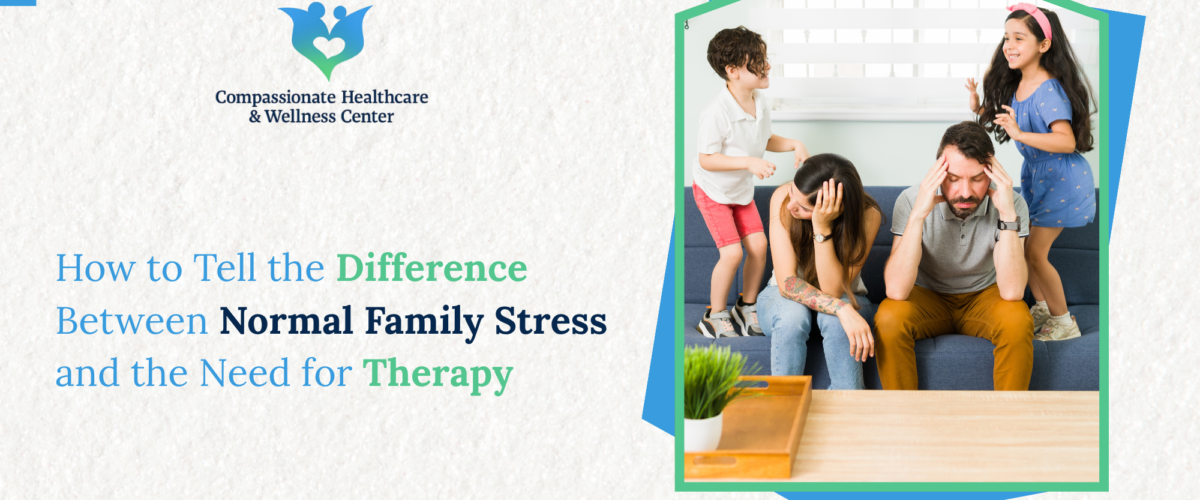
How to Tell the Difference Between Normal Family Stress and the Need for Therapy

How to Tell the Difference Between Normal Family Stress and the Need for Therapy

Every family has tough patches. If your money is tight or if your schedule collides, temper flares will surely follow after a long week. Most of the time these bumps resolve by themselves.

But sometimes the tension escalates, deepens, and begins to hurt those closest to you. Knowing the difference matters.

This post will teach you to identify what stress looks like when it is normal, when it has evolved into something worse, and how family therapy can help you find your balance again.

What a Normal Family Stressor Looks Like

Stress is a fact of family life. It creeps in when things go awry or obligations mount, usually dissipating as soon as the dust clears.

Think of it as a way your family learns to respond when they are under pressure, and not necessarily that something is broken.

Normal family stress often looks like this:

  • Arguing occasionally but getting over it within a day or two
  • Discomfort over immediate things like a move, a new baby, or exam season
  • Frustration that dissipates when everyone has gotten sleep or space
  • Conflicts where you can still listen and take care of each other afterward

Healthy stress is marked by one key point: recovery. Your family structure does not just bend under pressure, it bounces back.

After the storm has calmed, you still laugh, eat together, and feel connected. That dance of tension and repair is totally typical.

The Strain When Stress Crosses the Limit

The trouble starts from the moment stress stops lifting. Your family does not heal; it continues to act out against these traumas.

The mood at home is heavy and oppressive for weeks or months rather than days. This shift matters because it becomes impossible to use the coping tools you have always relied on.

Signs the Stress Has Gone Deeper

Look out for these alterations that indicate something more than common pressures:

  • Arguments that keep going round and round the same issues without ever reaching a resolution
  • Distance is created when everyone in the family stops speaking to each other or starts avoiding one another
  • A continuous tension that never goes away, even when things are quiet
  • One or more people appearing sad, withdrawn, aggressive, or anxious most of the time
  • Small problems provoking massive, violent reactions

As these patterns settle in, your family is dealing with more than just temporary stress. It might be struggling in a way that can be alleviated by outside help. If you notice this early, there is a real possibility of changing it before the damage spreads.

Red Flags That Signal It’s Time for Therapy

Some scenarios simply go beyond the normal ups and downs of life, where you need to seek help from a professional. These red flags are not indicators that your family has failed. They mean you are struggling with issues that require comprehensive, compassionate professionals.

If you find yourself saying any of the following, it might be time to look into therapy:

  • An unfinished conflict that is never finished and continues to reverberate
  • The incapacity to communicate, or the feeling that an honest conversation is not even possible
  • A child who is having problems with grades, behavior, sleeping, or withdrawing from the family
  • Big, life-altering circumstances such as divorce, loss, or illness that no one can bear alone
  • A family member with signs of depression or anxiety that do not get better
  • Substance use or other risky behavior is putting a burden on the household
  • Feeling like you have already tried a lot and nothing improves, leaving you stuck

What Family Therapy Looks Like and How It Works

Family therapy provides a supportive environment for your family to discuss issues and work through them with a trained therapist. This is not a matter of apportioning blame or choosing one camp over another. It is about understanding one another more deeply and developing healthier ways to relate.

What Actually Happens in Sessions

This is what you can expect from the process:

  • An atmosphere free of judgment where everyone can talk openly
  • A therapist trained to moderate topics that often hit a wall at home
  • Practical communication and conflict management tools
  • An approach that specializes in detecting patterns so you tackle root causes instead of superficial arguments
  • Space for everyone to be heard, including children, so that no voices are ignored

How It Makes a Difference

Family therapy heals the important things gradually. You train yourself to listen without engulfing, get to the root of recurring conflicts and repair trust that has been ground down by stress.

Our care at Compassionate Healthcare & Wellness Center is based on compassion, culture and evidence-based practice.

In addition to family and couples therapy, our team provides individual therapy and psychiatric evaluations as needed so that each person receives appropriate assistance.

Care is designed to meet your family exactly where your needs are, crafted with care and consideration for your particular story.

Make Your Home More Peaceful

Here are some takeaways that should help you differentiate temporary stress from issues that run deeper.

  • When life normalizes, typical family pressure disappears.
  • Chronic tension, distance, or conflict cycles are indicators that the trouble is deeper.
  • Get professional help if you see red flags like continuous fighting, withdrawal or signs of depression.
  • Family therapy is the safe space.

If stress keeps returning for your family and you are looking for help – please reach out to Compassionate Healthcare & Wellness Center.

Cortisol

The Link Between High Cortisol and Chronic Physical Fatigue

You’ve probably had your thyroid checked. Maybe your iron. B12. Vitamin D. Everything comes back normal or close enough that nobody flags it, and yet you’re dragging yourself through the day. Tired in a way that doesn’t respond to sleep. That gap between what the labs show and how you actually feel has a shorter list of explanations than most people realize, and cortisol is near the top of it.

Not low cortisol. Chronically high cortisol, the kind that comes from a stress response that’s been running longer than it was ever meant to and has started breaking things in ways that don’t have an obvious name on a test result.

Cortisol’s Normal Job

The adrenal glands release cortisol when the brain registers a threat. Blood sugar goes up, inflammation gets suppressed, and focus sharpens. In the short term it works exactly as intended. The issue is that the same system that evolved to handle a physical threat resolves in minutes has no built-in way to distinguish that from a financial crisis that’s been going on for eight months.

In a healthy system, cortisol has a daily rhythm. You peak around 8 am, which is partly why it pulls you out of sleep, and you drop steadily through the day before resulting in a low level at night. Chronic stress bends that curve. Instead, both levels remain too high when they are supposed to come down, or the whole rhythm just inverts. In either case, systems that rely on the normal cyclical pattern of cortisol begin to fire incorrectly.

Why It Produces Fatigue Specifically

Cortisol is the hormone of energy, so it seems paradoxical that excess cortisol leaves you fatigued. Once you see what chronic high cortisol does to the cells, the mechanism isn’t that complicated.

Cortisol is a catabolic hormone. It breaks it into smaller components in order to generate energy quickly. That’s useful for a sprint. Do that for six months and the cellular powerhouses – the mitochondria that generate energy needed for your cells to function optimally – begin to falter.

Sleep compounds the problem. Cortisol and melatonin exist on opposite ends of a see-saw. When cortisol remains elevated into the evening, it slows down and inhibits melatonin production.

You do fall asleep eventually but spend less time in slow-wave sleep, where the real physical recovery takes place. You slept, but your body is in recovery. Do that for weeks and the fatigue will no longer respond to any amount of rest because it’s sapped all healing power from every part of your life.

The third mechanism is inflammation. Acute cortisol release is anti-inflammatory. However, sustained cortisol exposure causes cells to turn off their cortisol receptors – a process known as glucocorticoid resistance.

This point is when cortisol signaling that stops inflammation is overridden and therefore systemic inflammation increases.

High inflammatory cytokines, particularly IL-6 and TNF-alpha, are very much associated with what researchers refer to as sickness behaviour: the bogged-down, everything-is-effort experience familiar to most people who have had the flu.

The flu isn’t producing it in chronic stress. It’s the same cytokines that acts in the absence of infection.

What Else Shows Up Alongside It

  • Weight gain around the abdomen, cortisol promotes fat storage and increases insulin resistance
  • Muscle breakdown, cortisol is catabolic in muscle tissue and degrades it for fuel over time
  • Getting sick more often, prolonged cortisol elevation suppresses T-cell activity and narrows immune response
  • Digestive issues, cortisol slows gastric emptying and disrupts gut motility, which is why stress reliably worsens IBS symptoms
  • Brain fog in the afternoon when cortisol is supposed to be lower but isn’t
  • Persistent anxiety or a baseline of low-level dread that doesn’t attach to anything specific
  • Elevated blood pressure, because cortisol increases vascular resistance

These symptoms evaluated separately often get individual explanations. The pattern only becomes visible when someone looks at them together and asks what’s upstream.

What Keeps Cortisol Elevated

The HPA axis, the hypothalamic-pituitary-adrenal system, has a feedback loop that’s supposed to signal the adrenals to slow down once cortisol has done its job. Under chronic stress that loop stops working properly. The brain stays in threat-detection mode because modern stressors don’t resolve cleanly the way a physical danger does.

The HPA axis dysfunction can persist with sleep deprivation alone. Skipping meals, which is interpreted by the body as a physiological stressor (that means it triggers the fight-or-flight response).

High alcohol intake disturbs cortisol rhythmicity directly. Training high-intensity without recovery time – increases cortisol rather than lowers it.

These stack on each other rapidly, and a person undergoing chronic stress who is also using ineffective coping mechanisms such as poor sleep hygiene and alcohol detoxification has an interrelated cortisol issue that simply extracting any one problem would be harder than extracting that individual factor alone.

The Mental Health Connection

Chronic high cortisol and psychiatric disorders are not parallel problems.

HPA axis dysregulation and elevated cortisol are consistently reported in both extremes of major depressive disorder research. This is a two-way street: depression dysregulates cortisol and chronically high cortisol has demonstrable neurotoxic effects on the hippocampus, which deals with memory and emotional regulation.

Anxiety keeps the stress response activated by definition. As long as anxiety is present and untreated, the cortisol problem has a continuous input feeding it. Lifestyle changes help at the margins but don’t reach the source.

This is why treating chronic fatigue that has a stress or psychiatric component requires actually treating the psychiatric component. Better sleep hygiene and cutting caffeine after noon make a difference at the edges but they don’t fix glucocorticoid resistance or hippocampal effects from years of elevated cortisol.

What Moves the Needle

  • Consistent wake times, which are the most powerful signal for resetting cortisol rhythm, more than sleep time
  • Reducing the sustained psychological load, which is harder to prescribe but matters more than any supplement
  • Moderate exercise rather than high-intensity training, which raises cortisol further when the baseline is already high
  • No caffeine after noon, since caffeine directly stimulates cortisol release and disrupts the evening drop
  • Treating the underlying anxiety or depression, because nothing else fully resolves the cortisol problem while that’s still running

Compassionate Healthcare and Wellness Center

At Compassionate Healthcare and Wellness Center in Richmond, Virginia, chronic fatigue that doesn’t have a clean medical explanation is the kind of thing worth bringing to a psychiatric and mental health evaluation rather than waiting for labs to show something. The team provides psychiatric evaluations, individual therapy, family and couples therapy, and medication management for adults dealing with depression, anxiety, and the physical toll of sustained stress.

If you’ve been exhausted for a long time and nobody has looked at what’s driving it from a mental health angle, that’s worth changing.

Phone: 804-234-3568

Email: Info@chwellnesscenter.com

Location: 2112 W Laburnum Ave., Suite 109, Richmond, VA 23227

Website: chwellnesscenter.com

Imposter Syndrome

Imposter Syndrome: When Confidence and Anxiety Collide

Nobody ever tells you that the more successful you become, the worse imposter syndrome gets. That sounds backward. There were low stakes initially, and with that, little expectation.

However, now you have a history of achievement to draw memory from. You are so reliable that everyone trusts you to make decisions and even gives you real responsibilities.

And every time someone believes in you, that voice saying “You don’t belong here” is getting so much louder.

And that is the cruel irony of imposter syndrome – so many talented, hard-working, fully capable people waste half their careers waiting to be discovered.

So What Actually Is It?

It was two psychologists, Pauline Clance and Suzanne Imes, who gave it a name all the way back in 1978!

They were researching high-performing women at universities and discovered that, unusually for such successful and well-educated women, the private beliefs of those women were that they were impostors. Not occasionally. Persistently. It was only a matter of time before someone caught on that they hadn’t actually earned any of it.

Clance and Imes referred to it as the “impostor phenomenon,” and the subsequent studies surrounding the term also revealed that it’s not solely a woman’s problem or an academic-based issue.

According to the Korn Ferry 2024 survey, 71% of U.S. CEOs indicate that they have imposter syndrome. CEOs. Individuals with big responsibilities whose decisions affect industries. Still sitting in board meetings, wondering if today’s the day someone finally calls them out.

Why Does Anxiety Get Tangled Up In All This?

Imposter syndrome is primarily regarded as a confidence issue by most people. Or perhaps excessive humility. However, that is not an accurate framing of what it is – this is a legitimate anxiety response.

Continual self-doubt has consequences, and it can affect how people function day-to-day in physical ways and lead to anxiety, depression, burnout and low self-esteem. Sleep. Focus. Energy. Relationships.

This matters because it affects what really helps with anxiety. If you think it’s just a confidence issue, you’ll reason yourself out of it: You have earned your seat at the table, you’re going to talk through it again with all those impressive credentials.

And perhaps that works for one day or two. Then a big presentation lands on your calendar, and the spiral starts again. You weren’t dealing with a thinking problem. You were dealing with an anxiety pattern.

High-performing environments reward the appearance of certainty. Admitting doubt feels dangerous, so people mask it, cultivating a polished exterior even as the internal experience is anxiety. Over time, the gap between public persona and private experience widens, and that gap itself starts to feel like proof of fraud.

Who Gets Hit Hardest

Transitions are the biggest trigger. Starting a new job, getting promoted into a role that stretches you, joining a program where everyone else seems to know exactly what they’re doing. Being the “new person” can make you question whether you truly belong or have the skills to succeed.

First-generation professionals deal with a particular version of this. You’re often the first in your family to reach a certain level, which means there’s no map. No one to call and ask “Is it normal to feel this way?” Every room you walk into is one nobody in your family has ever walked into. Your body registers that as a low-level alarm that keeps asking whether you should really be there.

For women, people of color, and first-gen professionals in spaces not built for them, it’s not just “Am I good enough?” It becomes “Am I good enough to be here?” That’s a heavier question entirely.

Perfectionism feeds it too. When your internal bar is set at flawless, every normal human mistake feels like proof that the fraud story was right all along.

What It Looks Like

Consider the guy who prepares obsessively for a meeting he could, without break, have orchestrated and performed, not because he’s thorough, but rather because he’s mortified of being blindsided.

Or the co-worker who always deflects praise, making every “great job” into “the team really pulled this one off.” The employee who never speaks in meetings despite clearly knowing more than 50% of the room.

They externalize their success instead of internalizing it, attributing wins to luck, timing, rather than ability. Success never hinges on competence, so confidence never grows. Each time you hit the next challenge, it sets off the same cycle again.

What Really Helps

A few things genuinely move the needle here.

Keeping real evidence of your work matters more than it sounds. Not a vague sense that things went okay, but actual documentation, saved emails where someone expressed specific appreciation, notes from a project that landed well.

Psychiatric providers actually suggest this because when the anxiety is at its loudest, facts are much easier to argue against than emotions.

Naming it dismantles the silence that perpetuates the cycle! More often than not, the individual suffering from imposter syndrome believes they are the only person in the room who feels this way – they’re almost always wrong.

Just saying it out loud to even one person you trust helps.

Imposter syndrome is something to pay more serious attention to when it is impacting sleep, causing you not to pursue opportunities that you actually want, or spiraling into chronic anxiety.

There is a lot of research backing cognitive behavioral therapy for this kind of work. You combat the root cause of the anxiety, which is those beliefs, instead of slapping positive thinking on top.

When It’s Time to Talk to Someone

The version of impostor syndrome you can learn to live with. And there is a version that takes over and runs someone’s life month after month, year after year, determining what they pursue and how much pride they take (if any) in anything at all.

If you’re in Richmond, VA or anywhere nearby and this is hitting close to home, the team at Compassionate Healthcare & Wellness Center works with people dealing with exactly this! Our licensed therapists and psychiatric providers offer individualized psychiatric evaluations, individual therapy and evidence-based treatment for anxiety, in person and via telehealth.

Learn more about our mental health services here.

You’ve already done the hard work of getting where you are. You deserve to actually feel like it.

FAQs

Is imposter syndrome an actual diagnosis?

No. It’s not in the DSM. But it’s a well-studied psychological pattern that co-occurs regularly with anxiety and depression.

Does it ever actually get better on its own?

Sometimes, especially with mentors or changed environments. But for people with chronic anxiety underneath it – the pattern tends to persist until something directly addresses it.

I’m a guy, does this apply to me?

Yes. It was first studied in women and women of color in competitive fields do experience it at higher rates. But it crosses genders consistently. That 71% of CEOs statistic? CEOs skew heavily male.


For more on this topic, the American Psychological Association’s coverage of impostor phenomenon is worth reading. For anxiety-related resources, the National Institute of Mental Health is a reliable starting point.