Personality Disorders

What’s the Difference between Mood Disorders and Personality Disorders

Mood disorders and personality disorders both affect the way someone feels or behaves. However, they are not the same. Understanding the difference will lead you to get appropriate care. Compassionate Healthcare & Wellness Center offers services for people of all ages. Our service provisions include psychiatric assessments, therapy, and medication management to support you or your loved ones.

What Are Mood Disorders?


Mood disorders change the way you feel for a long time. You may feel very sad, very worried, or have big shifts in mood. These problems come and go in phases. An individual with a mood disorder might experience periods of feeling okay, followed by times of intense lows or highs.

Major Depression

  • You feel sad most days. You may not enjoy things you used to like. You may feel tired or have trouble sleeping.

Bipolar Disorder

  • You have episodes of very high energy or very low mood. The highs and lows can last days or weeks.

It can begin at any age. Yes, it’s hard to deal with, but the right treatment helps. Over time, recovery means being able to feel again.

What Are Personality Disorders?


Personality disorders affect how a person thinks, feels, and gets along with others. These are long-term patterns. They start in their teen years or early adult life. They shape how a person sees the world and how they act in many different situations.

Borderline Personality Disorder

  • A person may have strong fears of being alone. They may have big mood swings and trouble with close relationships.

Avoidant Personality Disorder

  • A person may feel shy and avoid people because of the fear of being judged.

Personality traits are part of who a person is. When those traits become very rigid and cause big problems in life, doctors may call them personality disorders.

How They Are Different


Mood disorders and personality disorders differ in a few key ways.

Timing and Pattern

  • Mood disorders: Feelings change in episodes. You may be good for a while, then not. The change can be fast or slow.
  • Personality disorders: The pattern is steady and long-term. It is part of how you behave most of the time.

Cause and Focus

  • Mood disorders: Often linked to changes in brain chemistry, stress, or life events. Treatment often focuses on mood and energy.
  • Personality disorders: Often linked to long-term patterns, early life experiences, or how a person learned to cope. Treatment often focuses on relationships and behavior.

Treatment Approach

  • Mood disorders: Therapy, medication, and support can help the mood become stable. Treatment can work well in a few weeks or months.
  • Personality disorders: Therapy that helps with skills and relationships is often used. Change can take more time. Consistent care helps a lot.

Why It Matters


Knowing the difference helps you choose the right care. If you have strong mood swings, you may need medication or therapy that treats mood. If you have long-standing patterns that make it hard to keep jobs or friends, therapy that builds skills may help more.

How We Help at Compassionate Healthcare & Wellness Center


We know every person’s journey is different. We offer caring and professional help. Our services include:

  • Psychiatric Evaluations to find the right diagnosis.
  • Individual Therapy to work on thoughts and feelings.
  • Family & Couples Therapy to improve relationships.
  • Medication Management when medicine can help you feel steady.
  • Anxiety & Depression Treatment for mood problems.
  • ADHD & Mood Disorders care for focus and mood issues.
  • Grief & Trauma Support to heal from hard events.
  • Support for Life Transitions like moving, new jobs, or loss.

Our team meets you with kindness. We make a plan that fits you. We work with you and your family when you want that support.

When To Seek Help


Seek help if:

  • You feel sad or hopeless most days for two weeks or more.
  • Your moods change so much that they hurt your job or school.
  • You have trouble keeping friends or feel scared in close relationships.
  • You hurt yourself or think about hurting yourself.
    If any of these happen, call for an evaluation. We can listen and guide you to the right care.

What To Expect from an Evaluation


An evaluation is a talk with a trained clinician. We ask about your feelings, sleep, work, and family life. We may ask about past events and medicines. The goal is to find the best plan for you. We do not rush. We make sure you feel heard.

Simple Tips You Can Try Now

  • Keep a mood diary. Write down how you feel each day.
  • Try a sleep routine. Establish a daily sleep routine.
  • Move your body. Walk, stretch, or play outside.
  • Talk to someone you trust. Tell them how you feel.
  • If you feel in danger, get help right away.

A Kind Note About Labels
Labels like “mood disorder” or “personality disorder” are tools. They help us plan care. They are not who you are. You are a person with strengths and things to work on. We meet you with respect.

Final Thought


Mood disorders and personality disorders both matter. They need different kinds of care. If you are unsure, a psychiatric evaluation is a good first step. At Compassionate Healthcare & Wellness Center, we make a safe space for you to get help and to heal. You do not have to do this alone.

FAQs

Q. Will therapy help?
Yes. Therapy helps many people. It teaches new skills and ways to cope.

Q. How do I book an evaluation?
Call us or visit our website. We will help you find the right appointment.
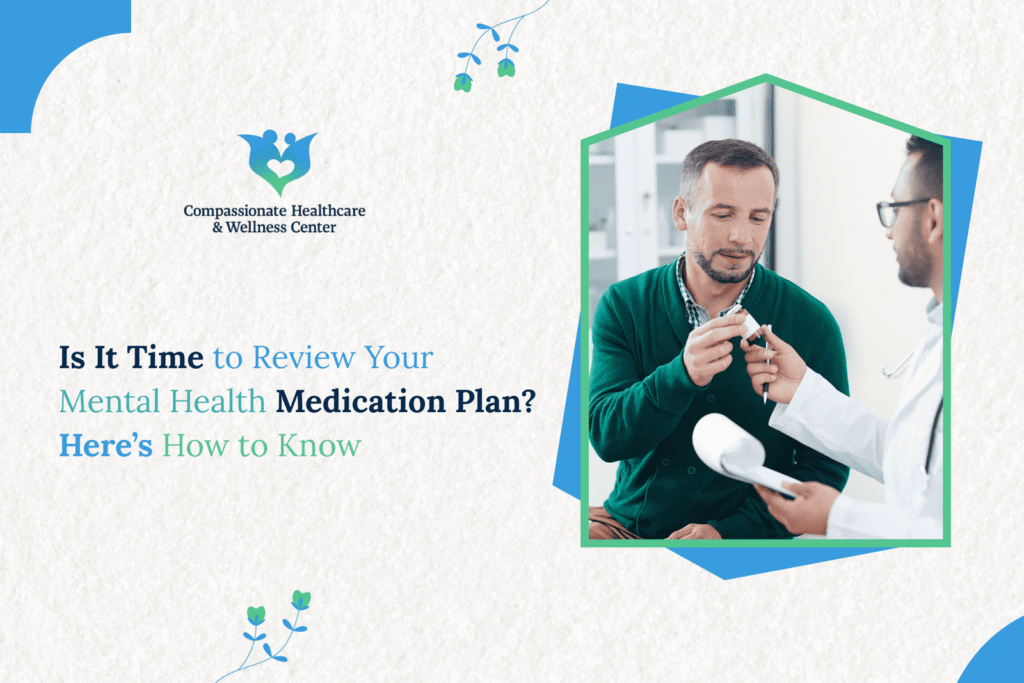
Medication Plan

Is It Time to Review Your Mental Health Medication Plan? Here’s How to Know

If you take medication for your mental health, you’re already taking a powerful step toward healing and emotional stability. But here’s something many people don’t realize: medications are not a “set it and forget it” part of treatment. They work best when regularly monitored and adjusted as your life evolves.

Just like your physical health, relationships, stress levels, and responsibilities change, your brain and body do, too. That means your medication plan may need periodic check-ins to make sure it’s still doing what it’s supposed to do—helping you feel and function at your best. 

Why Medication Reviews Are Important

Psychiatric medications interact with your brain chemistry. Over time, several things can affect how well a medication works:

  • Changes in metabolism
  • Aging
  • Hormonal shifts
  • Stress and lifestyle changes
  • Interactions with new medications
  • Illness or medical conditions

Without reviews, a medication that once helped may slowly lose effectiveness—or worse—start causing unwanted side effects. Medication management is not just about prescribing; it’s about ongoing optimization. 

Signs It May Be Time for a Medication Review

You don’t need to wait until something is “wrong.” However, it’s definitely time to talk to a specialist if you notice:

  •  Your symptoms haven’t improved after weeks or months
  •  Your mood has changed—more sadness, irritability, anxiety, or emotional swings
  •  You’re experiencing new or bothersome side effects
  •  You’re having trouble sleeping, concentrating, eating, or functioning as usual
  •  You’ve started a new medication from another provider
  •  You’re thinking about stopping your medication. Always consult a provider to support your mental health safely.
  •  There’s been a major life change—pregnancy, grief, job stress, medical diagnoses, or a move 

One important rule: Never stop a psychiatric medication on your own. Some medications need to be tapered slowly to avoid withdrawal symptoms or relapse. Your provider can guide you safely.

How Often Should You Have a Review?

Even if everything feels stable, ongoing checks are essential. Most mental health providers recommend:

  • A review within a few weeks of starting a new medication
  • A review 1–4 weeks after a dose change
  • Every 3 months for the first year
  • Every 6–12 months once things are stable

Think of these reviews like routine maintenance for your mental well-being—just like an oil change helps keep a car running smoothly. 

What If the Medication Stops Working?

This can be frustrating, but it’s very common. The brain adapts, life changes, and sometimes the medication needs an adjustment. A review may lead to:

  • A dose change
  •  Switching to a different medication
  •  Adding therapy or another supportive tool

These adjustments aren’t a setback—they’re signs that treatment is personalized, responsive, and thoughtful. 

Preparing for a Medication Review

To get the most out of your visit, bring:

  • A list of medications and supplements you take
  • Notes about how you’ve been feeling
  • Questions or concerns you want to discuss
  • A trusted support person if you’d like

A few short notes can make a big difference in helping your provider understand your lived experience—not just your symptoms. 

The Bottom Line

Your medication plan should never feel like a mystery. It should feel like a collaborative process—one where you understand what you’re taking, why you’re taking it, and how it’s helping you.

If something isn’t working, feels different, or leaves you unsure, that’s not a sign of failure—it’s a sign it’s time for a review.

At our practice, we believe mental healthcare is most effective when you are informed, supported, and treated as a whole person—not a diagnosis. Whether you’re just beginning treatment or have been on medication for years, we’re here to guide you every step of the way.  

Grief

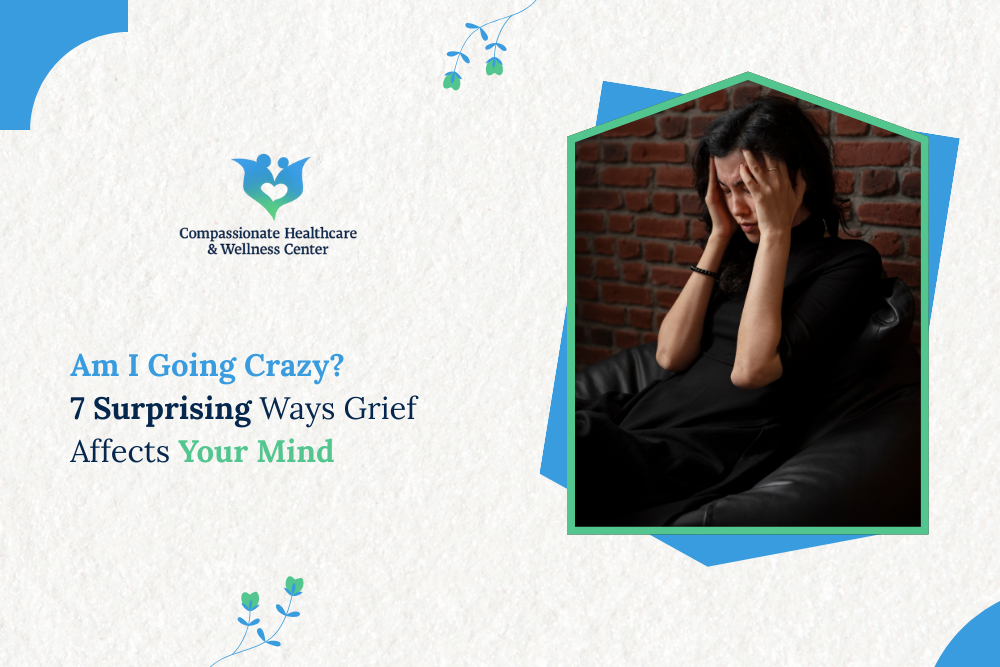
Am I Going Crazy? 7 Surprising Ways Grief Affects Your Mind

Grief refers to a very deep feeling of pain that you experience when you lose someone or something very important.

It can alter the manner in which your mind functions. Sometimes you may think, “Am I going crazy?” But you are not. Grief can make your thoughts feel different, and this is normal.

At Compassionate Healthcare & Wellness Center, we offer gentle and caring Grief & Trauma Support to help you move through these tough moments with safety and understanding.

Below are seven surprising ways grief affects your mind, written to help you know you are not alone.

7 Surprising Ways Grief Affects Your Mind

  • Grief Can Make Your Thinking Slow

When grief sits in your heart, your brain has to work very hard. You may forget what you were saying. You might look at a task and feel too tired to begin. You can read a page and forget everything.

That does not imply that you are wrong. It just requires your mind to have extra rest. Grieving can make even small tasks feel huge. In this situation, it’s best to take it slow. Relax and focus on one task at a time.

At Compassionate Healthcare & Wellness Center, we remind people that slow thinking during grief is not failure. It is your brain protecting you.

  • Grief Can Make You Feel Confused

You may feel lost about what to do. You may forget things that were always easy for you. You may even feel like your thoughts are cloudy or mixed up.

This confusion happens because your heart is carrying something heavy. Your brain is trying to understand a big change that came too fast or too hard.

You are not losing control. You are moving through a painful moment, and your mind is doing its best to keep up.

With gentle support, the confusion becomes lighter over time.

  • Grief Can Make Life Feel Like a Dream

Some people describe grief as feeling far away from the world. Life seems dull, colors faded, sounds softer. You’re watching from a distance, not living fully.

This is a frightening emotion, but it is your mind’s way of shielding you against excess pain at once. Your brain sometimes creates space so the hurt does not overwhelm you all at one time.

At Compassionate Healthcare & Wellness Center, we teach people how to ground themselves again, little by little, so the world feels real and steady.

  • Grief Can Make Your Feelings Change Fast

Your emotions may move quickly. You may cry in the morning, feel relaxed later, then feel bothered again at night. You may fluctuate from melancholy to upset to spent in the same afternoon.

These updates are not a reflection of your being weak. They are signs that your heart is trying to heal. Grief is not one straight line. It moves like waves, and every wave feels different.

Our team at Compassionate Healthcare & Wellness Center helps people understand these fast-changing feelings so they feel less scary and more human.

  • Grief Can Make You Feel Afraid

Grief is filled with fear. You can be concerned with the future. You, too, might be afraid of losing another. You may wonder if you will always feel this way or if your life will ever feel normal again.

Fear emerges as grief makes everything seem uncertain. Your mind seeks to safeguard you, even if the fear feels immense at times.

You need not bear this fear alone. The experience of speaking to a person who is trained in grief and trauma can help your mind feel less tense and secure.

  • Grief Can Make Sleep Hard

Your mind may stay busy when you try to rest. You may think about your loss late at night. You might dream of the person you’ve lost. Some sleep too much, others too little.

Sleep struggles are normal during grief. Your mind is trying to heal even when you close your eyes.

At Compassionate Healthcare & Wellness Center, we guide people with gentle tools to help sleep improve slowly.

  • Grief Can Make You Question Yourself

You are asking yourself why you have all these things at once. You can wonder whether you are strong enough or you are supposed to be stronger by now. You might feel guilty, confused, unsure, or lost.

These are questions that are involved in the grief. You are getting to know how to live with your loss. The process of healing is long, and you have the right to be patient yourself as well as towards others.

When It Is Time to Ask for Extra Help

Such changes are natural, and with time, most individuals start to feel lighter. But at times, the sorrow is too heavy, even after weeks have passed.

You might notice that sleep is hard to find. You may feel down or even unsafe in your thoughts.

If this happens, it is important to ask for help right away. You do not have to carry this pain alone.

At Compassionate Healthcare & Wellness Center, we offer Grief and Trauma Support for people of all ages. We provide a comfortable and secure environment where you can speak, breathe and recover step by step.

We accept most major insurance plans and are welcoming new patients now.

Set an appointment or send a referral to support someone you care about.

You Are Not Losing Your Mind

Grief may change your mind set in countless surprising directions. These changes can feel strange, sudden, or scary.

But they do not mean you are losing your mind. They mean you are human. They mean your heart is trying to heal.

At Compassionate Healthcare & Wellness Center, we walk beside you through this process. Your story matters. Your pain matters. Your healing matters.

You do not have to face this alone.

FAQs

Is it normal to forget things when I am grieving?

Yes. Many people forget things or feel slow during grief. Your brain is tired, and this is a normal response.

Will these feelings last forever?

No. Grief changes with time. With care and support, the feelings become easier to carry.

ADHD

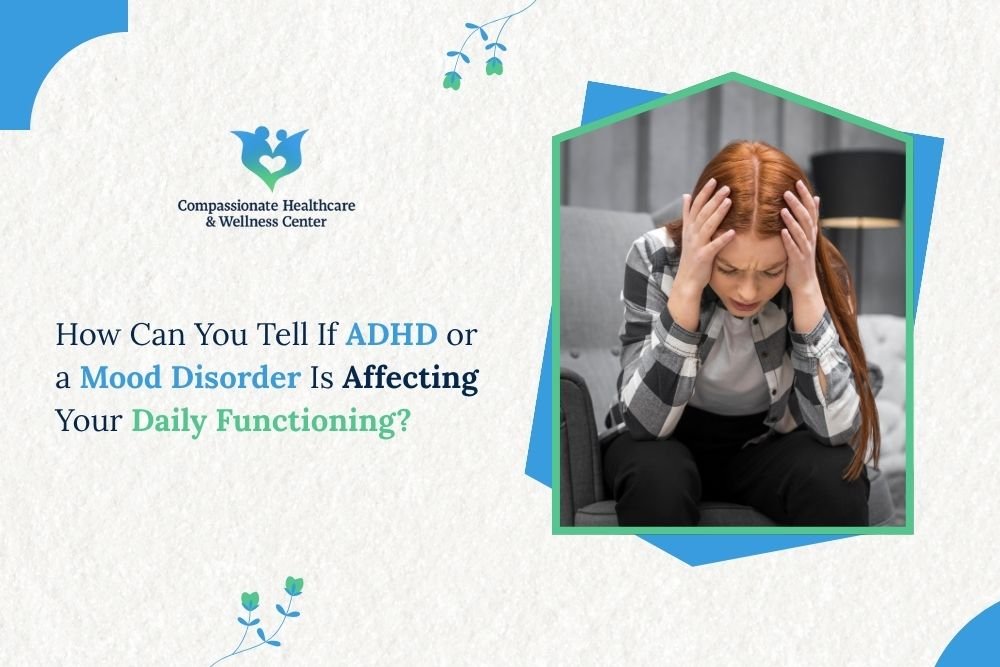
How Can You Tell If ADHD or a Mood Disorder Is Affecting Your Daily Functioning?

Life can feel very heavy sometimes. You might wake up and feel like staying in bed all day. Or maybe you have so much energy that your body cannot sit still. Everyone has good days and bad days. That is normal. However, sometimes the bad days occur too frequently. You may start to wonder why things seem so challenging for you.

You may wonder if this is simply a matter of your personality. You might wonder if you are just lazy. Often, the answer is not laziness. Two common reasons for these struggles are ADHD and mood disorders.

At Compassionate Healthcare & Wellness Center, we help people find answers to these questions. We want to help you understand what is happening inside your mind. It is vital to understand the distinction. The signs can look the same, but the causes are different. Knowing the truth is the first step to feeling hopeful again.

What Is Daily Functioning?

First, let’s examine what “daily functioning” means. It is simply a way to describe how well you manage your day. Think about your normal routine.

  • Can you wake up when your alarm goes off?
  • Do you brush your teeth and take a shower?
  • Can you finish your work or school tasks?
  • Do you talk to your friends and family?
  • Can you sleep well at night?

When you are doing well, you can do these things. You might be tired, but you get them done. When your functioning is low, simple things feel like climbing a big mountain. Both ADHD and mood disorders make these tasks hard. But they make them hard in different ways.

Understanding ADHD in Simple Terms

ADHD stands for Attention Deficit Hyperactivity Disorder. Many people think only kids have it. That is not true. Adults have it too. ADHD affects how your brain focuses. It also changes how you control your actions.

When you have ADHD, your brain is always looking for something new. It gets bored very fast. This makes “boring” tasks very painful to do.

Signs of ADHD in Your Life

  • You Lose Things: You are ready to leave, but you cannot find your keys. This happens almost every day. Your brain was busy thinking about something else when you put them down.
  • You Cannot Finish: You start to clean your room. Then you find a book and start reading. An hour later, the room is still messy. You did many things, but you did not finish the first job.
  • You Interrupt Others: When a friend tells a story, you have a great idea. You feel compelled to say it right now. You interrupt them. You do not mean to be rude. Your brain just moves too fast.

Understanding Mood Disorders in Simple Terms

Mood disorders are different. They deal with your feelings and emotions. The most common ones are depression and bipolar disorder. Anxiety is also very common.

When you have a mood disorder, your internal feelings are strong. It might feel like rain that never stops (depression). Or it might be a storm of worry (anxiety).

Signs of Mood Disorders in Your Life

  • You Are Very Tired: You sleep all night, but you wake up tired. Your body feels heavy. Taking a shower feels like too much work. This is common with depression.
  • No Fun: You used to love hobbies like soccer or painting. Now, you do not care about them. You do not want to see friends. You just want to be alone.
  • Worrying Too Much: This is a big sign of anxiety. You worry about being late. You worry that people do not like you. The worry makes your stomach hurt.

The Big Difference: Why Can’t You Do It?

It can be confusing. Both ADHD and depression can stop you from doing your work. But the “why” is different.

Ask yourself: “Why am I not doing the task?”

  • If It Is ADHD: You want to do the work. You know it is important. You sit down to do it. But you get distracted. You look at the wall. You check your phone. You feel restless. You feel like you physically cannot start.
  • If It Is a Mood Disorder: You do not care about the work. You think, “What is the point?” You feel sad or hopeless. You do not have the energy to care. You feel like you will not start because it does not matter.
  • Sleep is Different Too: With ADHD, your body is tired, but your brain is awake. You cannot stop thinking. With depression, you might sleep all day to escape. With anxiety, you cannot sleep because you are scared about tomorrow.

How Compassionate Healthcare & Wellness Center Helps

You do not have to figure this out alone. Our team provides high-quality mental health care. We believe that everyone deserves to be seen, heard, and supported in a safe and inclusive space.

Here is how we help you get your life back:

Psychiatric Evaluations

  • This is where we start. We talk to you. We ask about your life and feelings. We listen to your story. This helps us know if it is ADHD, a mood disorder, or both.

Individual Therapy

  • Talking helps a lot. In therapy, you learn new skills. We help you organize your life if you have ADHD. We help you handle sad feelings if you have depression. We also offer grief and trauma support if a past event is still affecting you today.

Medication Management

  • Sometimes, the chemicals in your brain need help. Medicine can help you focus. It can help lift the heavy clouds of sadness. We work with you to find what is best for your body.

Family & Couples Therapy

  • These disorders affect your family too. We help you talk to your loved ones so they understand you better.

Taking the Next Step

If you ignore these signs, life becomes more difficult. You may struggle at work or have conflicts with family. But you are not a failure. You just need support.

Imagine waking up and feeling ready for the day. Imagine feeling happy to see your friends. Our goal is to empower you. We want you to feel hopeful about your future.

If you are struggling, please don’t hesitate to reach out to us. We are here to help you find balance.

FAQs

Q. Is the doctor visit scary?

No. It is just a talk. We sit in a safe room. You tell us how you feel. We listen to your story to help you.

Q. Is ADHD just for kids?

No. Many adults have ADHD. They might struggle at work or at home. It is never too late to get help.

Individual Therapy

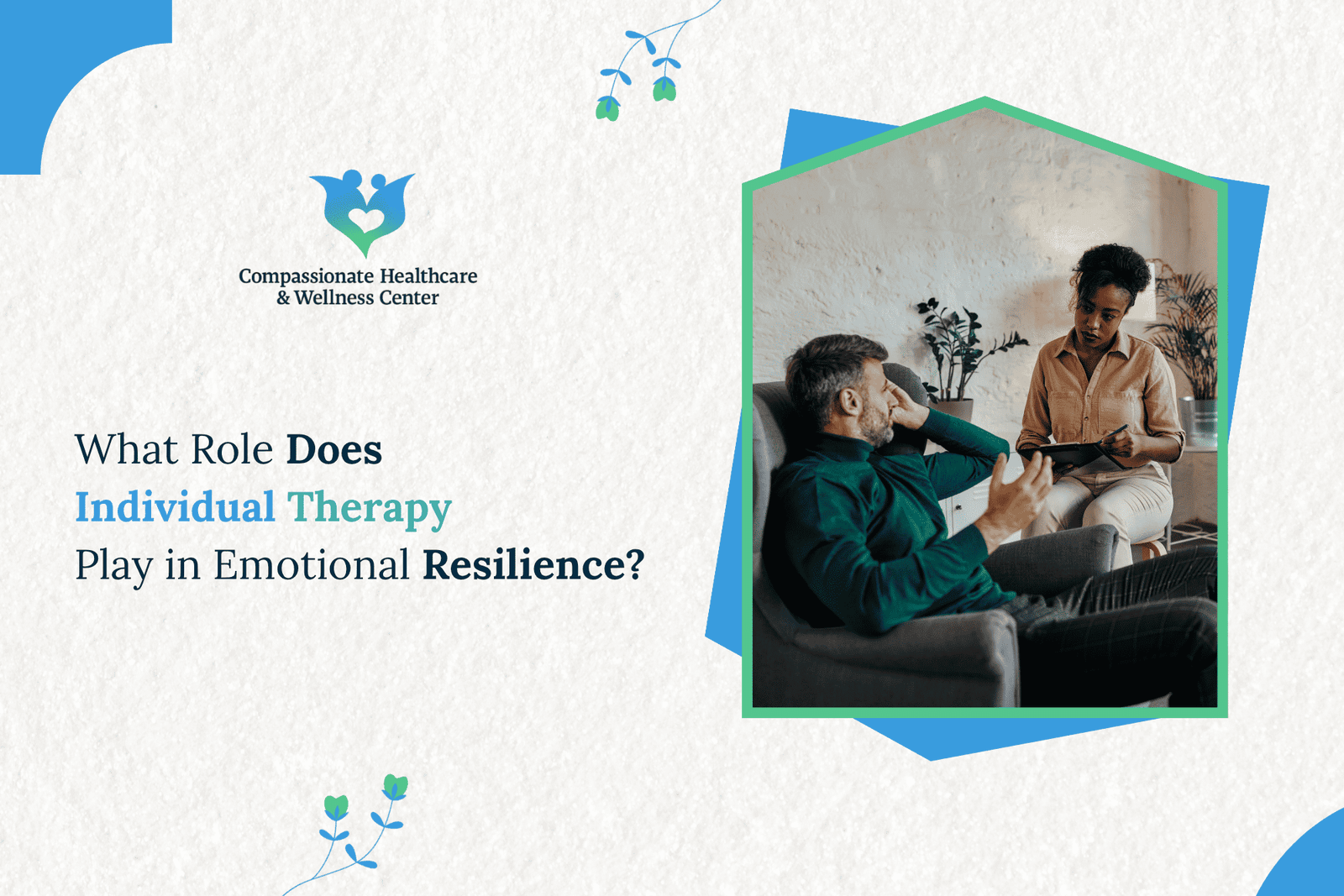
What Role Does Individual Therapy Play in Emotional Resilience?

Emotions can feel big. Life can bring hard times. Individual therapy offers a safe space for individuals to express, heal, and grow.

At Compassionate Healthcare & Wellness Center, we offer Individual therapy that helps you build strength inside.

Below, we will explain the role that individual therapy plays in promoting emotional resilience.

What Is Individual Therapy?

Individual therapy is time with a trained helper. You meet with a licensed therapist. The talk is private. You can express your opinions and emotions.

The therapist pays attention to listening. You learn ways to feel better. Sessions are for you. The pace is yours.

What Is Emotional Resilience?

The capacity to recover is known as emotional resilience. It is so that you can deal with depressed, angry, or frightening moments.

This does not mean you never feel pain. It means you can continue to educate and lose desperation.

What Role Does Individual Therapy Play in Emotional Resilience?

Individual therapy offers a secure and predictable environment for exploring your feelings and learning effective coping strategies. Here’s how individual therapy supports emotional resilience:

  • Safe listening. During the therapy, you are free to talk. This makes you feel less isolated.
  • Name your feelings. When you understand how you are feeling, you can plan accordingly.
  • Learn tools. Therapists teach easy tools to relax your body and mind.
  • Practice new habits. Therapy can help you explore new responses and coping strategies.
  • Change unhelpful thoughts. You are taught to identify hurtful thoughts and attempt to replace them with kinder ones.
  • Build self-care. Therapy teaches minor tips on how to care for your body and mind.
  • Make a plan for hard times. You gain knowledge on what to do in the event of a recurrence of stress.
  • Find your strengths. Therapy is something that helps you recognize the positive aspects within yourself.

Each of these things helps strengthen your inner muscles. You can do a lot in the long term and be less concerned.

What Happens in a Therapy Session?

Sessions are simple. Your therapist will explore your inner feelings. You can tell your story. You might try:

  • Practicing breathing techniques to relax.
  • Grounding exercises to feel safe.
  • Skills to use at home, school, or work.

You are in charge of the pace. The therapist assists in the process of leading you, yet it is up to you to disclose as much as possible.

Who Can Benefit from Individual Therapy?

Anyone can benefit. Children, teens, and adults. Individuals are experiencing anxiety, sorrow, grief, trauma, or stress.

People who want to know themselves better. You need not wait until things are very bad. Timely assistance can count a lot.

Simple Tools You Learn in Therapy

Therapy teaches easy and practical tools. Here are a few:

  • Breathing breaks. Slow breaths help calm your body.
  • Grounding. Use your senses to feel safe in the present moment.
  • Thought check. Ask, “Is this thought true?” This can make worries smaller.
  • Small steps. Try one small change each day.
  • Feel naming. Say the emotion out loud: “I feel sad.” This makes it less heavy.

These tools are short. You can use them at home, at work, or at school.

How Therapy Feels Different Here

At Compassionate Healthcare & Wellness Center, we mix care and skill. Our therapists are trained and kind. We offer a calm place to speak.

Each session is made for you. We listen without judgment. We help you set small goals. We walk with you as you practice new skills. You will feel cared for as you grow and develop.

Tips to Practice Resilience between Sessions

Make therapy a daily habit with these simple ideas.

  • Keep a tiny journal. Write one sentence regarding your day.
  • Take a one-minute breathing break when angry.
  • Compliment yourself every morning.
  • Take a five-minute body movement. A walk or a stretch helps mood.
  • Express your emotions to someone you rely on.

Small steps lead to big changes.

What If Therapy Feels Hard?

It is okay to feel unsure. Change can be hard. Talk to your therapist about worries. They will help you move slowly. You can take breaks. You are in charge of the pace. Trust grows with time.

Conclusion

Individual therapy builds emotional resilience. It is a safe place where one can learn to cope, know their feelings, and be stronger.

Looking for individual therapy? Our team at Compassionate Healthcare and Wellness Center is ready to help you. Individual therapy for anxiety, depression, grief, trauma, and stress is offered by our skilled expert. We also provide psychiatric evaluation and medication care.

Call or book an appointment. We’ll welcome you kindly

FAQs

What if I feel nervous about starting therapy?

Feeling nervous is normal. Our therapists at Compassionate Healthcare & Wellness Center are caring, patient, and supportive.

Can I combine therapy with medicine?

Therapy often works best with medicine. We offer both at Compassionate Healthcare & Wellness Center for overall mental health.

Will therapy change my personality?

Therapy doesn’t change you; it helps you understand and handle life better.

Grief

What If You Didn’t Have to Process Your Grief on Your Own?

Grief can feel heavy. It can make the world seem smaller. You can cry, conceal, or remain silent. You will become confused, and you do not know what to do further. But you need not grieve yourself.

We are aware of the grief of loss at Compassionate Healthcare & Wellness Center. We offer supportive Grief and Trauma care where healing begins when you’re heard and supported.

So, what if you didn’t have to process your grief on your own? Now, what exactly that means, we should discuss.

You Don’t Have to Be Alone

Grief is a normal feeling after loss. It may come after the death of someone you love. It may occur after a breakup, job loss, or a significant life change.

Grief looks different for everyone. Some people cry a lot. Some feel numb. Some get angry. All of these are fine.

Talking helps. When you say the hard things out loud, they lose some power. When someone holds space for your story, it can feel lighter. That is why it matters to have another person with you, not to fix you, but to hear you.

At Compassionate Healthcare & Wellness Center, we listen with love. We help you take small steps toward feeling better. You can cry, talk, or sit quietly. However, you feel it is okay.

Why Sharing Helps

When you share your pain, your mind and body do not carry it alone anymore. Sharing can:

  • Make the load feel smaller.
  • Help you see new ways to cope.
  • Keep you from feeling stuck.
  • Remind you that you are cared for.

Our team listener can also teach you tools that help on hard days. You can learn ways to sleep better, breathe calmly, and relax your body. These small steps help your heart heal gradually.

What If You Didn’t Have to Process Your Grief on Your Own?

Just imagine that someone is there to listen to you after losing. Consider one simple thought and be kindly treated. Suppose you learn one easy tip on how to sleep better or eat a bit more. That is what grief support can be, a secure and caring presence.

At Compassionate Healthcare & Wellness Center, you are in good hands, as our team of caring professionals will support you throughout. You do not need to go through your grief all by yourself.

How Compassionate Healthcare & Wellness Center Helps

At Compassionate Healthcare & Wellness Center, your mental wellness is our priority. We make a warm space to heal. We are now accepting new patients. We offer care for individuals, families, and children. Our team is kind and skilled. We want to walk with you, step by step.

We provide Grief and Trauma Support that helps you feel held and heard. We can help you:

  • Express your emotions freely without fear or shame.
  • Understand your grief and its impact on your life.
  • Develop coping tools to manage emotional pain.
  • Rebuild your sense of hope and connection to life.

We help you find hope beyond pain. We care for you, and clearly, no matter the cause of your grief. Seniors can benefit from our programs tailored for assisted living mental health support.

What to Expect in Grief Support

You might wonder what to expect when you arrive. That’s perfectly normal. Here are some simple things to anticipate.

First Visit: You will meet a caring person. We’ll ask about you, your loss, and your feelings. You can ask any question you want.

Next Visits: We will make a small plan together. You will learn gentle ways to help yourself on hard days.

Helpful Tools: You may learn to take deep breaths. You may learn how to sleep better. You may learn how to talk about your loved one. You may learn how to be kind to yourself.

Family Time: Sometimes family members come too. Everyone learns to listen and care for each other.

Medication: Some people may require medication for a short period. It helps your body and mind rest. We help you find what’s best for you.

Small Steps that Bring Change

If grief feels big, small steps can help. These steps are easy and gentle. It helps you keep moving forward.

Try small things:

  • Take slow, deep breaths when you feel tense.
  • Name one feeling each day.
  • Share a memory of your loved one with a friend or counselor.
  • Walk outside for five minutes.

Each small act helps you heal a little at a time.

When to Ask for Help

If grief lasts more than a few weeks, consider getting professional help. Here are some signs it’s time to reach out:

  • You can’t sleep.
  • You can’t eat.
  • You struggle to care for yourself.
  • You have troubling thoughts.

You can discuss them with someone in case you have any of these problems.

You need support and protection. It is no disgrace to seek assistance, though you think.

Ready to Find Help?

What if you didn’t have to process your grief on your own? You do not have to. Compassionate Healthcare & Wellness Center is here to support you. We give care that is kind, simple, and strong. We listen. We hold space. We give hope.

If you are ready, reach out. Our grief support team is here for you. We are accepting new patients. Let us help you find light in the midst of loss. Healing begins when you are heard, held, and given hope beyond the pain.

FAQs

Do I need a referral to start?

No. You can call us directly to make your first appointment.

How much time will it take to feel better?

Healing takes time. Step by step, you will feel better.

Is that to keep on feeling sad after a long period?

Yes. Grief takes time. Falling out of love is not a sign that you are not recovering. It is an indication that you loved deeply. We make you live with that love tenderly.